


Discover how Lyubasha Kyleshko transforms burlap into comfortable, structured, hand-embroidered dresses and corsets, made to order in a fusion of Spanish and Ukrainian traditions.
No one expects to find burlap at the heart of a haute couture piece. Its open weave, natural color and association with everyday rural uses may make it seem, at first glance, far removed from occasion dresses and corsetry. That apparent contradiction is precisely where Lyubasha Kyleshko’s Cruise collection begins.
The designer chose a humble fabric to demonstrate that a garment’s value does not depend solely on the initial prestige of its material. It also comes from the pattern cutting, the technique, the time devoted to every detail and the ability to imagine a new life for something familiar.
In this collection, cotton burlap is combined with internal corset structures, soft linings, lace, fringe and floral motifs embroidered entirely by hand. The result is a series of made-to-order dresses and corsets that preserve the fabric’s natural identity while translating it into the language of haute couture.
From burlap to haute couture
The burlap is not hidden beneath other materials. Its texture remains visible and becomes an essential part of the design.
Lyubasha Kyleshko works with its rustic character rather than trying to remove it. The weave, natural tone and fringed edges give the garments personality and create a deliberate contrast with the collection’s more delicate elements.
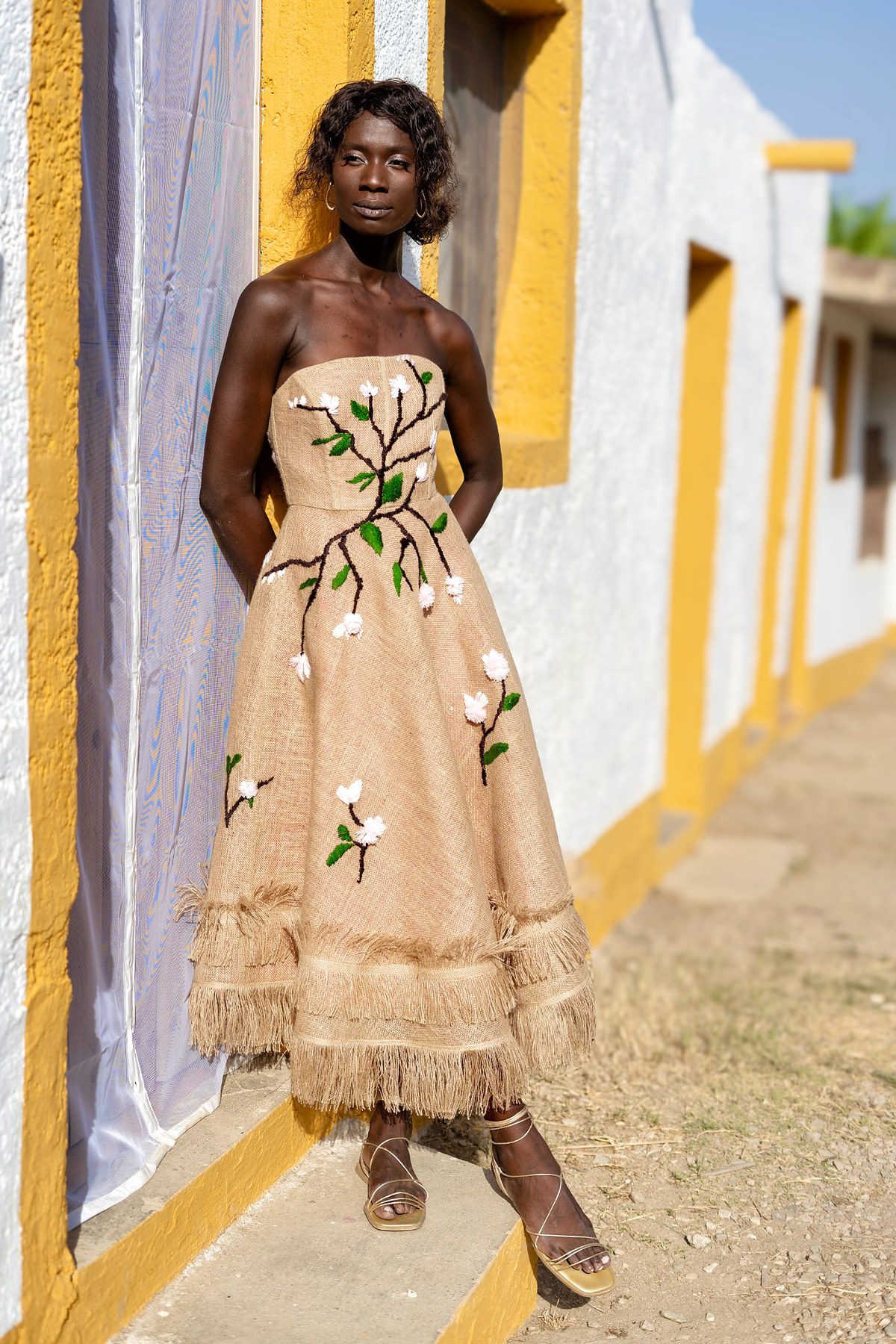
This contrast is especially apparent in the long dresses. Through pattern cutting, the burlap gains volume, movement and a defined silhouette, while the fringe visually extends the fabric and responds as the wearer walks.
In the corsets, the material is adapted to a far more precise construction. The apparent simplicity of the outer surface conceals a technical structure designed to support, define and move with the body. Haute couture emerges here as a process of transformation: luxury lies not only in using an expensive fabric, but in everything that is done with it.
A collection that brings Spain and Ukraine together
Cruise represents the meeting of the two cultures that form part of Lyubasha Kyleshko’s personal and creative history.
Burlap connects with humble materials, traditional crafts and the rural landscapes of Spain and Andalusia. Its natural appearance evokes the earth, the countryside and a form of beauty that does not need to conceal its origins.
Embroidery is introduced over this foundation, a technique closely connected to the designer’s Ukrainian culture. In Ukraine, embroidery has formed part of clothing, domestic life and cultural identity for generations. In this collection, Lyubasha does not reproduce those motifs literally. Instead, she brings the tradition of handwork to a new source of inspiration: Spanish nature.
Branches, leaves and flowers travel across the dresses and corsets, evoking fields, Mediterranean vegetation and almond blossom. The Spanish landscape provides the motifs; Ukrainian sensitivity is expressed through the way they are embroidered.
“We believe that true beauty is born when heritage, nature and contemporary elegance come together.”
This fusion is not an ornament added at the end of the process. It is present from the choice of material to the construction of the silhouette and the placement of every flower. The designer’s journey can also be explored in My Story (available in Spanish).
Floral embroidery as part of the design
Every floral motif is made entirely by hand. Before the embroidery begins, the garment, seams, volume and the way the design will travel across the body must all be studied. A branch cannot be distributed in the same way on a corset as it is on a full skirt or a long dress.
The composition must work with the pattern. In some pieces, the branches begin on the bodice and continue onto the skirt. In others, individual flowers create points of light across the natural surface of the burlap. The direction of the stems helps to follow the silhouette and generate visual movement.
The embroidery also introduces a tactile contrast. The firm, open texture of the burlap is combined with soft volume, delicate color and details that require hours of handwork.
For this reason, two garments may share the same inspiration without being exactly alike. The position of a flower, the shape of a branch or the distribution of color gives each creation its own particular character. Industrial repetition is replaced by a slower and more personal process.
Does burlap feel itchy?
This is one of the first questions prompted by the collection. The appearance of burlap may suggest that it will feel rough or uncomfortable against the skin. However, in these garments, the burlap forms the outer surface and does not rest directly against the body.
Every dress and corset incorporates a soft, breathable lining. This layer creates separation between the skin and the outer texture, improves comfort and helps to stabilize the garment’s construction.
The inside is made with the same attention as the visible exterior. For Lyubasha Kyleshko, a haute couture piece cannot be limited to creating a striking image. It must also feel pleasant to wear, allow freedom of movement and provide confidence throughout a special occasion.
The surprise lies not only in discovering that a dress is made from burlap. It also comes from realizing that it can be far more comfortable than its appearance might suggest.
Structured corsets with metal boning
The corsets reveal the most technical side of the collection. Beneath the burlap, lace and appliqués lies an internal structure built to maintain the garment’s shape and adapt it to each woman’s measurements.
Lyubasha Kyleshko uses flexible metal boning positioned at specific points within the corset. These components help distribute tension, support the fabric and preserve the line of the design.
Their purpose is not to turn the corset into a rigid structure or force the body into an artificial shape. The aim is to achieve a balance between support, stability and mobility.
- Individual pattern cutting.
- Precisely positioned seams.
- Carefully distributed metal boning.
- Soft internal lining.
- Fittings carried out on the body.
- Final correction of every tension point.
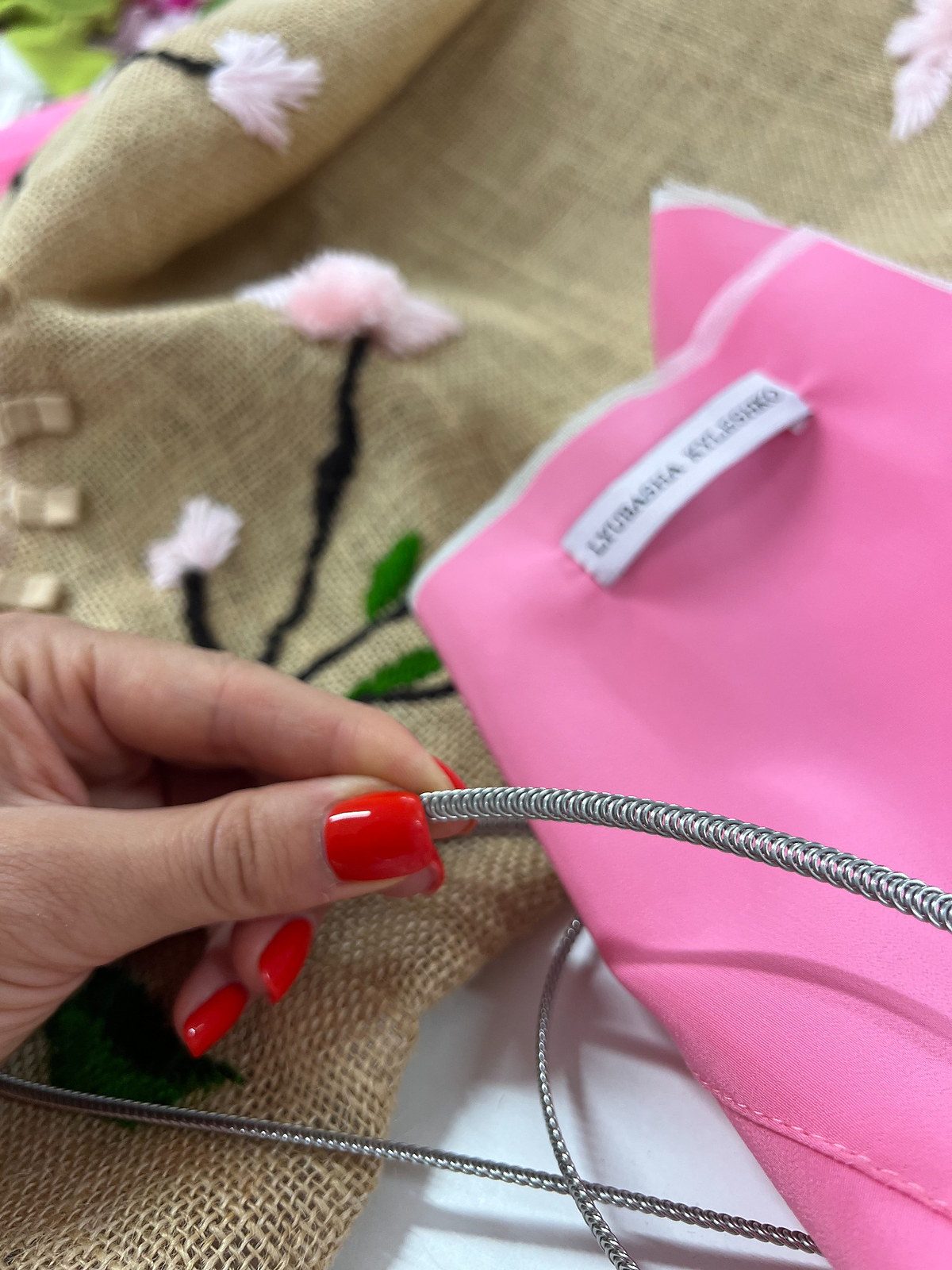
The interior photograph reveals a part of the work that normally remains unseen. The metal structure and lining are not secondary details: they determine how the corset fits and how it feels to wear.
Burlap and black lace: a more graphic interpretation
The collection is not limited to botanical motifs or soft tones. Another direction combines natural burlap with black lace, dark textile appliqués and a visually more intense construction.
The lace introduces transparency and precision over the burlap’s open weave. Black appliqués create volume at the center of the corset, while the peplum and fringe extend the silhouette toward the hips.
Paired with black trousers, the corset takes on a more contemporary character. The same material used in the long almond-blossom dress is adapted here to a more graphic and versatile ensemble.
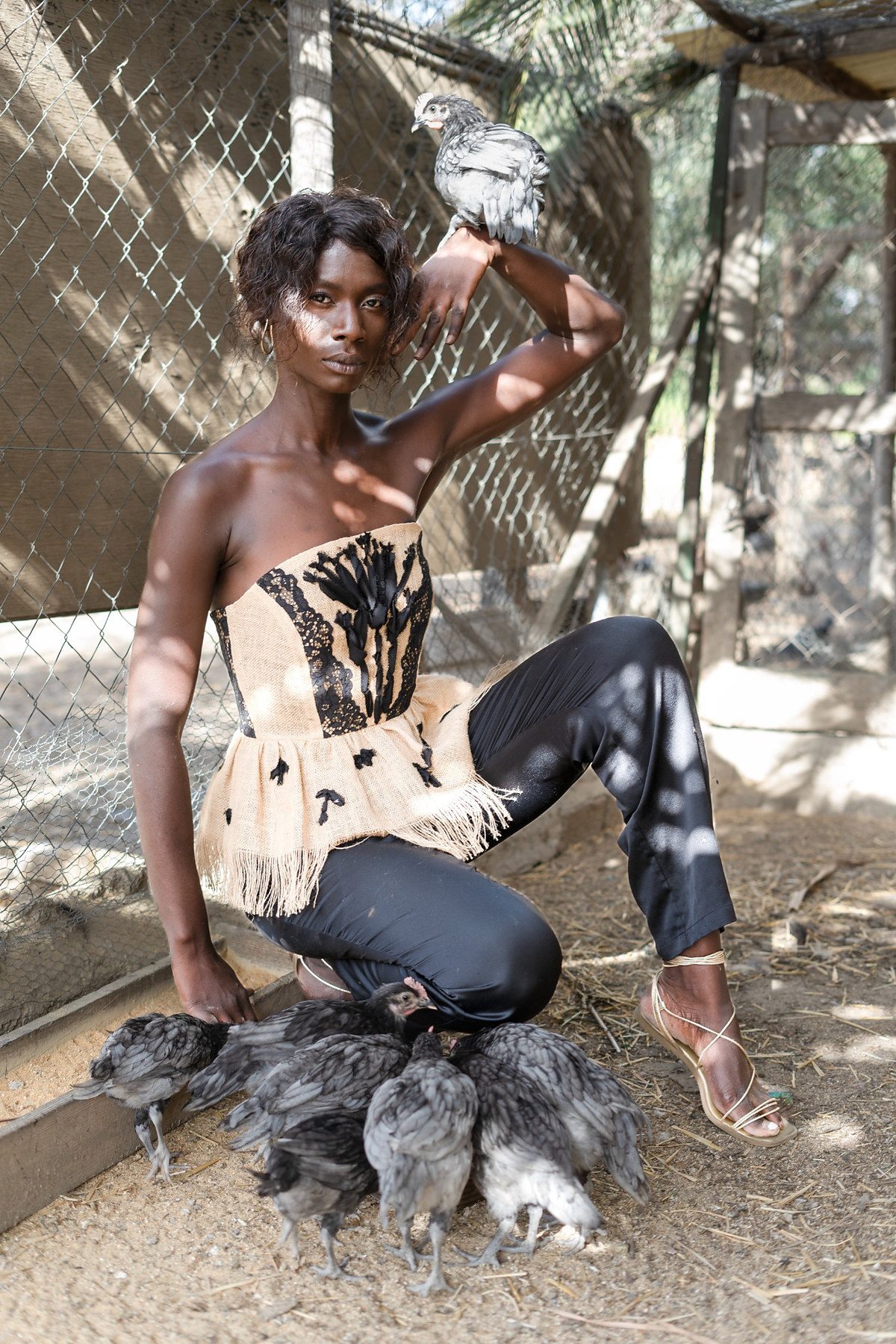
This second interpretation shows that burlap is not used as an isolated device or a one-off surprise. It becomes a creative language capable of taking on different forms within the same collection.
The technical work begins before the garment exists
Transforming burlap requires an understanding of its limits and behavior. Its open weave can respond differently to tension, seams and pattern cuts. To integrate it into a structured garment, certain areas must be stabilized, seam allowances calculated and the joining of other materials carefully planned.
In the black corset, the lace is secured to the burlap through a precise construction process. The stitching must respect the lace motif, prevent distortion and keep the composition clean.
This stage should not be confused with the hand-worked floral embroidery. They are different techniques with different purposes: embroidery builds the botanical motifs stitch by stitch, while sewing integrates the lace and the garment’s various components.
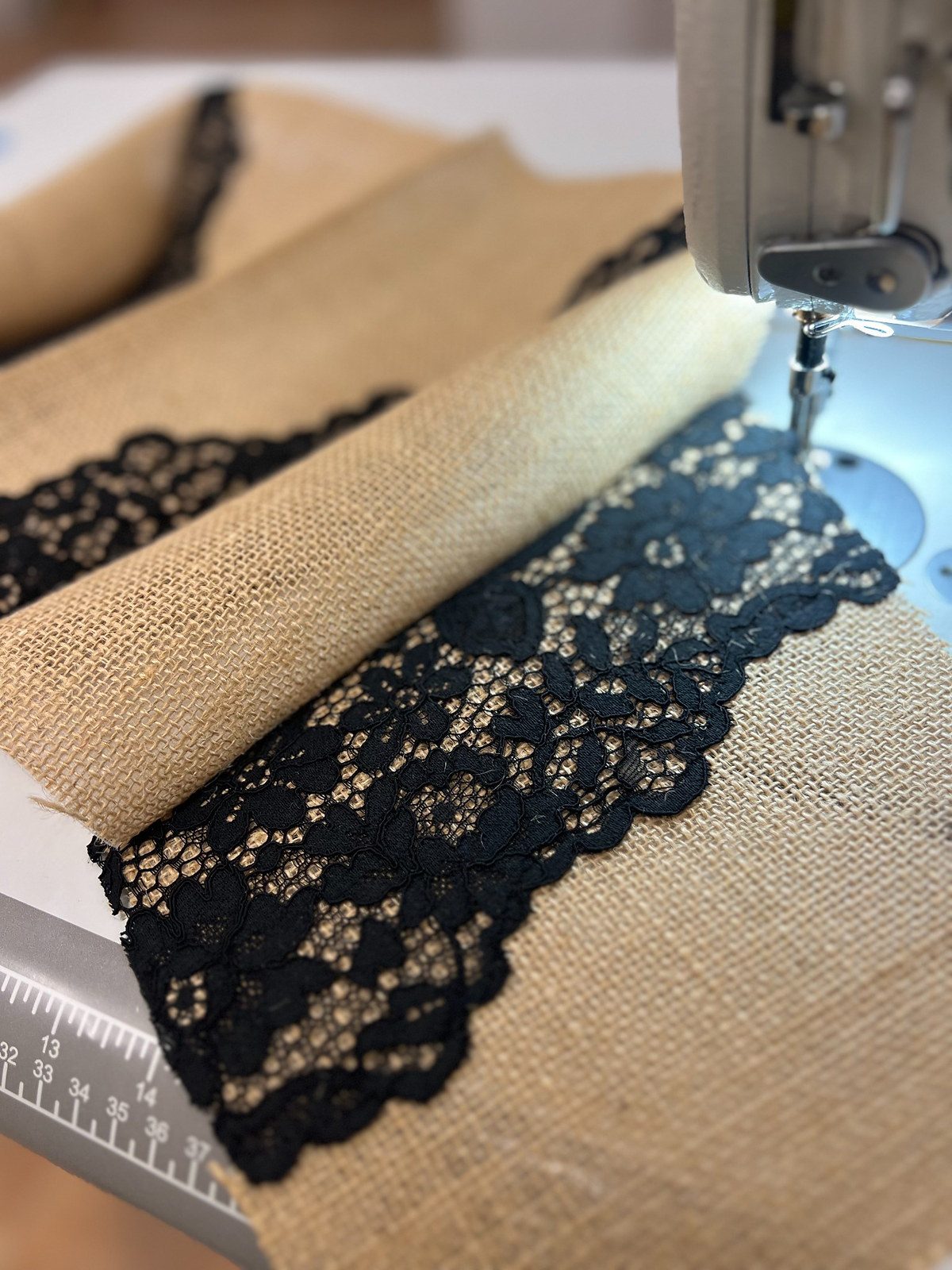
Both processes require precision and form part of the atelier’s craftsmanship. The finished piece shows only the final result. Behind it lie the fittings, corrections and technical decisions needed to turn a traditional fabric into a structure capable of dressing the body.
Dresses and corsets made exclusively to order
Pieces from the Cruise collection are not mass-produced or offered as conventional products in the online store. Every dress or corset begins with a commission and is developed according to the client’s measurements, the type of garment, the occasion, the desired silhouette, the level of structure, the embroidery and the fittings required.
Working to order makes it possible to adapt the construction and devote the necessary time to hand embroidery. Exclusivity does not depend only on producing a small number of pieces. It lies in the process through which each garment is created for a particular woman.
“Every creation requires time and dedicated craftsmanship.”
For this reason, commissions should be placed well in advance. Embroidery, corsetry and fittings cannot be rushed without affecting the care with which every piece is constructed.
A different way of understanding luxury
The Cruise collection raises a question: can a humble material become luxury? For Lyubasha Kyleshko, the answer lies in transformation.
Value appears in the hours of work that are not immediately visible. In the lining that protects the skin. In the metal boning that supports the shape. In the flower embroidered by hand. In a seam corrected during a fitting so that the corset adapts more precisely.
Burlap does not stop being burlap. It retains its color, texture and history. Haute couture does not disguise it; it reveals possibilities that are not normally associated with it.
This creative decision connects past and present. A material traditionally used for everyday purposes enters a contemporary garment without losing its identity. Sophistication comes from looking differently at something that once seemed simple.
A collection attracting international interest
The first images of the collection have generated a particularly significant response among audiences in the United States, according to inquiries and reactions received by the brand.
The proposal is instantly recognizable. The combination of burlap, corsetry and hand embroidery creates an image unlike that of conventional occasion dresses.
Then comes the story: a humble material transformed, two cultures meeting, a garment created for specific measurements and an artisanal process that means no two pieces need to be identical.
This international interest shows that a creation deeply connected to its designer’s identity can be understood beyond its place of origin. It does not need to abandon its story in order to connect with new audiences.
Who is this collection designed for?
The burlap dresses and corsets are designed for women seeking a piece with a distinct identity and who value the process as much as the final result.
- A garment different from mass-produced designs.
- A corset adapted to her measurements.
- Embroidery completed by hand.
- A natural yet sophisticated aesthetic.
- A creation with cultural meaning.
- Direct attention throughout the process.
- A piece conceived for a special occasion.
It is not simply a matter of choosing a dress or corset. The client takes part in defining a creation that must relate to her body, her style and the moment for which it has been commissioned.
Frequently asked questions about burlap dresses
What type of burlap is used?
The collection uses cotton burlap selected for its texture, natural tone and ability to be incorporated into structured dresses and corsets.
Does the burlap come into contact with the skin?
No. The pieces include a soft internal lining that separates the burlap from the body and improves comfort.
Do the corsets have an internal structure?
Yes. The corsets use flexible metal boning and an internal construction adapted to the design and the client’s measurements.
Is the embroidery done by hand?
Yes. The collection’s floral motifs are made by hand and distributed according to the pattern of each garment.
Are all the designs identical?
No. They may share materials and inspiration, but made-to-order construction and handwork introduce individual differences into every creation.
Can the pieces be purchased directly from the online store?
This line is not currently sold as a standard product in the online store. The pieces are made exclusively to order through direct contact with the atelier.
How can I commission a piece?
The most direct way to explore the designs and discuss a commission is to contact Lyubasha Kyleshko through Instagram or WhatsApp.
Discover the Cruise collection
Burlap, corsetry, lace, soft linings and hand embroidery come together in made-to-order dresses and corsets created in the Lyubasha Kyleshko atelier in Almería.
Discover the pieces and the creative process on Instagram, or contact the atelier directly to discuss a personalized design created to your measurements.
+34 624 01 80 31 [email protected] Send a message through the contact form Atelier Lyubasha Kyleshko · C/ Plácido Langle, 6 · 04001 Almería, Spain
Be First to Comment