


Learn what to wear to a daytime or evening wedding, including the right dress length, colors, fabrics and accessories, with guidance from Lyubasha Kyleshko.
Choosing what to wear to a wedding begins long before deciding on a color or heel height. The time of the ceremony provides an initial guide, but the venue, season, level of formality and dress code specified by the couple are what ultimately give the outfit its meaning.
Traditional etiquette remains useful as a starting point: it helps explain why certain lengths, fabrics and accessories are associated with daytime weddings and others with evening celebrations. Today, however, wedding guests have more options. A midi dress can work from morning to night; flats can be as elegant as heels; and a well-constructed tailored suit can suit the occasion just as precisely as a dress.
The key is not to follow every convention automatically, but to interpret the occasion with respect and choose a garment that works with the body, allows natural movement and preserves the identity of the person wearing it.
The time of day is a guide, but the invitation comes first
Before looking for a wedding guest dress, read the invitation again. A note such as cocktail attire, formal attire, black tie or a specified color palette reflects a deliberate choice by the couple and should take precedence over general recommendations.
When no explicit dress code is given, the context provides the answers. A civil ceremony in a rural setting does not call for the same approach as a formal celebration in a hotel; nor would you dress in exactly the same way for a spring lunch and a winter dinner. The schedule matters, but it should always be considered alongside four factors:
- The type of ceremony and the venue where it will take place.
- The season, expected weather and duration of the event.
- Your relationship with the couple and your role at the wedding.
- The level of formality suggested by the invitation itself.
A reliable rule: if an instruction is unclear, it is more elegant to ask the couple or the organizers than to guess. Etiquette should help you feel part of the celebration, not become a source of uncertainty.
What to wear to a morning wedding
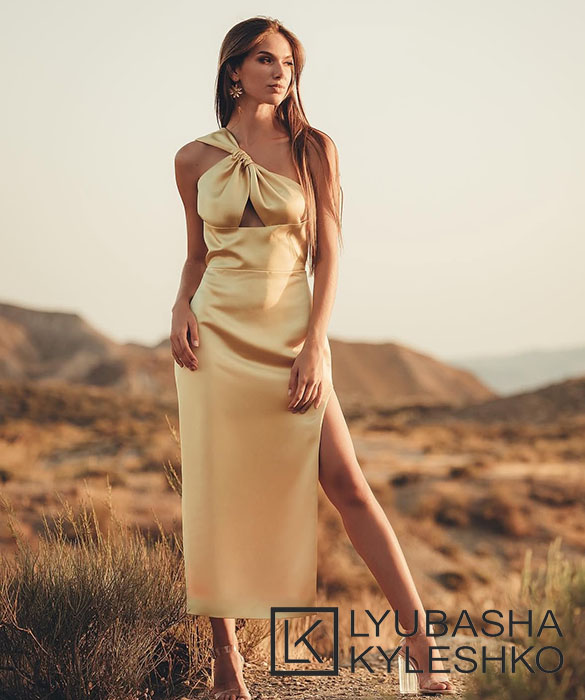
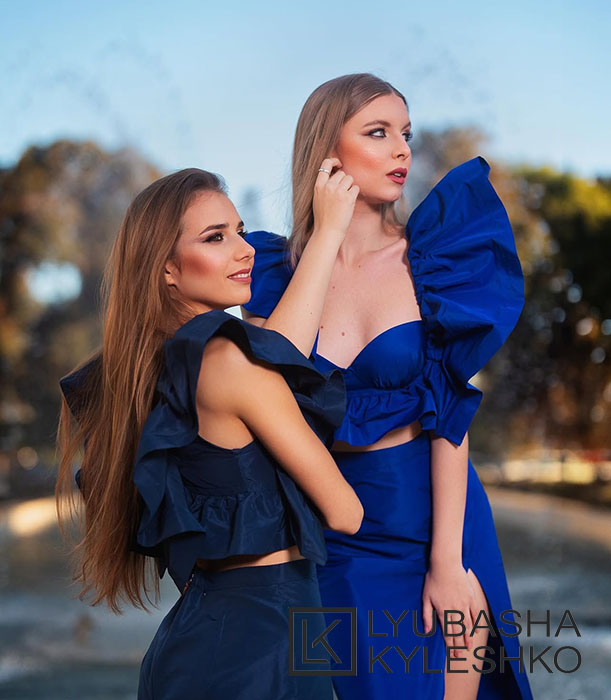
Natural light and the usually more relaxed character of a morning wedding favor garments with movement, luminous colors and details that can be appreciated up close. Knee-length cocktail dresses and midi dresses remain the most common choices, although they do not amount to an absolute ban on other lengths.
Length and silhouette
A cocktail dress, a midi design, a two-piece ensemble or a tailored suit can all work very well for a daytime wedding. The choice depends more on construction and formality than on an exact hemline. Fluid lines add lightness; structured silhouettes create a more ceremonial presence; and a well-positioned waist can balance proportions without sacrificing comfort.
Color and fabrics
Soft dusty tones, natural colors, blues, greens, pinks and corals integrate easily into daylight. More intense shades are also possible when the design remains balanced. Rather than restricting the choice to a fixed palette, consider how the color works with the skin and how it will appear in the actual wedding setting.
Crepe, chiffon, taffeta and satin finishes can create very different effects depending on their weight, sheen and construction. For a morning celebration, fabrics that retain movement and textures that add interest without relying on excessive shine often work particularly well.
Accessories and footwear
Wide-brimmed hats, formal hats and larger fascinators traditionally belong to daytime weddings, but they are not compulsory. Statement earrings, a headband or a polished hairstyle can complete the look just as coherently. When choosing shoes, stability and the duration of the event should matter as much as appearance: block heels, low heels, sandals or refined flats are all valid options when they work with the outfit.
What to wear to an afternoon wedding
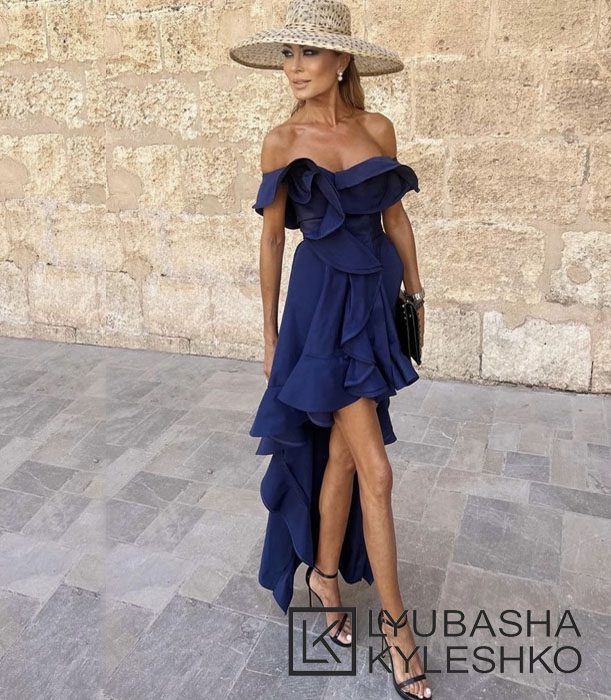
An afternoon wedding offers exceptional versatility. As the light changes, the styling can gain depth of color, definition and presence without automatically becoming a gala look. A midi dress remains a reliable and elegant choice; a full-length dress can also make sense when the setting and level of formality support it.
From luminous colors to deeper tones
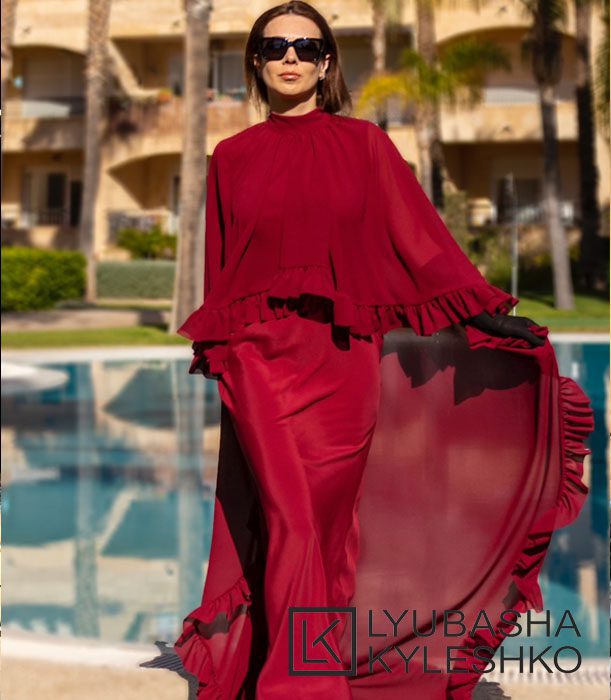
Navy, green, burgundy, red, pink, mauve and earth tones can all work naturally. Afternoon celebrations allow for stronger contrasts and slightly richer finishes, although color should never be chosen solely because of the time of day. Harmony with the skin, silhouette and accessories remains essential.
Texture, structure and movement
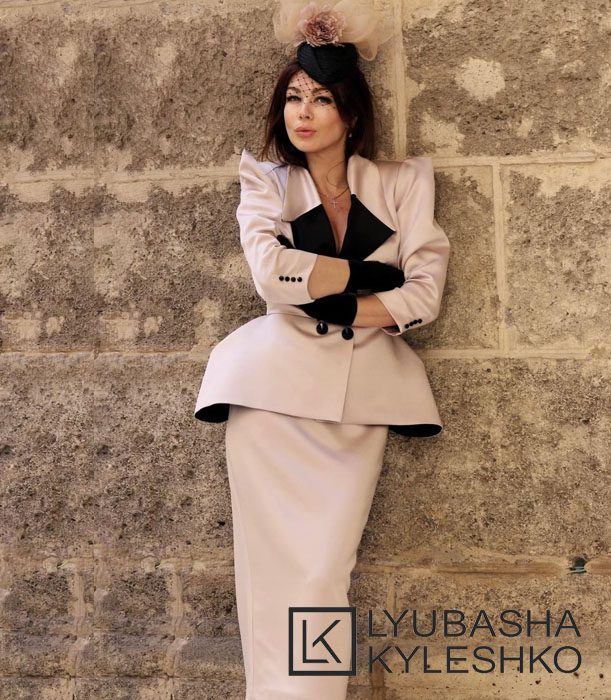
Crepe with a good drape, chiffon used for sleeves or capes, taffeta that builds volume, or a controlled satin finish can elevate a design without overwhelming it. In a designer garment, the final effect depends not only on the name of the fabric, but also on the pattern cutting, seam placement and the way the garment responds to movement.
Accessories through the transition
As the day progresses, headpieces tend to become smaller and accessories may focus on earrings, brooches, clutches or metallic details. This is a useful convention, not a requirement. The aim is to establish one focal point: when a dress already has volume, embroidery or a striking construction, accessories can support it rather than compete with it.
What to choose for an evening wedding
Evening celebrations allow for a stronger visual presence, but elegance does not mean accumulation. A full-length dress may be appropriate, especially when the invitation specifies formal attire; a precisely constructed midi dress, a jumpsuit or a trouser ensemble can also work. The level of ceremony should matter more than the assumption that every evening wedding requires a floor-length gown.
Color and shine with intention
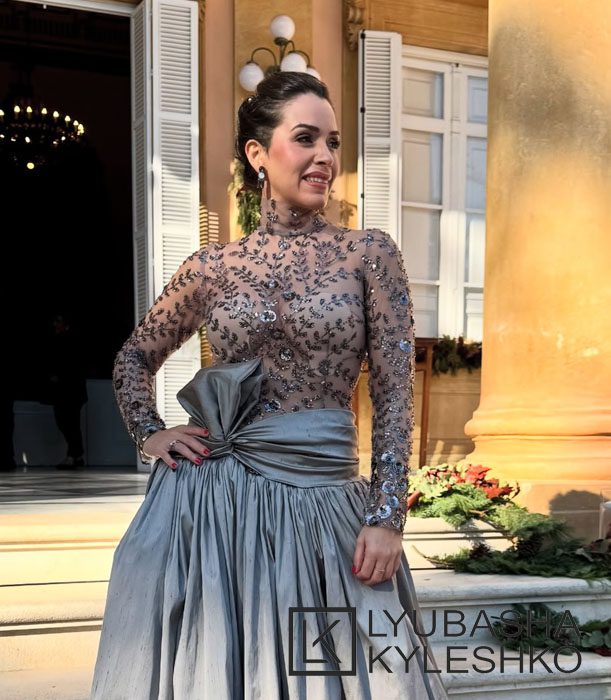
Deep tones—black, midnight blue, burgundy, dark green or gray—find a natural setting in evening light. Vivid colors can also work when the design remains coherent. Crystals, appliqués, sheer elements and luminous finishes are most effective when they belong to the composition rather than being added all at once.
The importance of proportion
In a design with volume, a slit, a neckline or shine, decide which element will take the lead. The proportion between bodice and skirt, the position of the waist and the way the dress moves while walking are more important than following an isolated trend. A well-fitted garment can look more sophisticated than one with far more ornamentation.
Shoes that let you enjoy the celebration
High heels are not a condition of elegance. A stable heel, a balanced platform, a low heel or a refined flat shoe can all accompany an evening dress. The choice should account for the ground, the number of hours spent standing and the possibility of dancing, because discomfort ultimately changes posture and the way any garment is carried.
White, black, headpieces and heels: rules that need context
Certain questions appear in almost every search about wedding guest dresses. Today, the answer can rarely be reduced to yes or no without considering the invitation and the couple's preferences.
Can a wedding guest wear white?
As a matter of respect, it is prudent to avoid an entirely white, ivory or bridal-toned outfit unless the couple has indicated otherwise. A white dress code or explicit permission changes the situation completely. When in doubt, asking remains the simplest option.
Is black reserved for evening weddings?
Black has become fully integrated into wedding guest styling, especially for afternoon and evening celebrations. The cut, fabric and accessories determine whether the result feels understated, festive or overly severe. During the day, it can be lightened with color, texture or luminous accessories when appropriate to the context.
Are a headpiece or heels compulsory?
No. Both are styling tools. A formal hat can enrich a morning wedding look and heels can alter the proportions of a dress, but neither should be imposed when it does not reflect the guest or makes it difficult to enjoy the celebration. The coherence of the look and the confidence with which it is worn take priority.
How to choose a dress that works beyond the photograph
A wedding guest dress should be considered in motion. Sitting, walking, climbing stairs, greeting people, eating and dancing are all part of the experience. During a fitting, therefore, it is useful to assess not only the front view, but also the back, the behavior of the neckline, the true length with the chosen shoes and any points where the fabric creates tension.
Six checks before deciding
- Does it respect the dress code and the character of the venue?
- Does the color work with the light and timing of the celebration?
- Can you sit and walk without constantly readjusting it?
- Does the underwear integrate cleanly without changing the silhouette?
- Do the shoes preserve the intended length and posture?
- Do the accessories support one clear focal point instead of competing?
Fit is especially important in structured garments, asymmetric designs and dresses with draping. A small alteration can transform the fall of the fabric, stabilize a neckline or restore balance to the silhouette. The atelier and online store serve different purposes here: a collection garment is selected from available styles and sizes, while a made-to-measure commission is developed through measurements, fittings and an individual quotation.
The atelier approach instead of universal formulas
For Lyubasha Kyleshko, the choice does not begin by asking which part of the body should be hidden, but which proportions might be balanced and what kind of presence the woman wants to convey. Two guests attending the same wedding may need completely different solutions even when they share the same schedule and dress code.
Pattern cutting, fabric and fit must work together. A chiffon sleeve can add movement; crepe can define a clean line; taffeta can build volume; and a corset can provide structure. None of these elements is inherently better: its value depends on how it relates to the design and to the person wearing it.
This attention to materials and construction also forms part of the designer's creative research. It can be seen from another perspective in the article on burlap dresses in haute couture, where an unexpected fabric is transformed through pattern cutting, corsetry and handwork. The story of the brand is explored in My Story.
Frequently asked questions about wedding guest dresses
What should I wear to a daytime wedding?
A short cocktail dress and a midi dress are common choices. A tailored suit, jumpsuit or two-piece ensemble can also work. The venue, season and dress code specified by the couple should complete the decision.
Can I wear a long dress to a morning wedding?
It can make sense when the invitation, your role in the wedding or the type of ceremony justifies it. For a guest without special instructions, a midi dress is usually more versatile, but there is no universal prohibition.
What should I choose for an afternoon or evening wedding?
Midi and full-length dresses, jumpsuits and trouser ensembles may all be appropriate. As formality increases, deeper tones, textures and luminous details can be introduced in a balanced way.
Can a wedding guest wear black?
Yes, especially for afternoon or evening celebrations. The result depends on the cut, fabric and accessories. In a daytime setting, it can be softened with color or more luminous elements.
Is it appropriate to wear white to a wedding?
It is prudent to avoid an entirely white or ivory outfit unless the couple requests or expressly authorizes it. A white detail within an outfit dominated by another color is not necessarily the same as dressing like the bride.
Do I have to wear heels?
No. Flats, low heels and block heels can all be elegant and may be more suitable for the ground or the duration of the event. Footwear should preserve the dress length and allow safe, comfortable movement.
What if the invitation does not specify a dress code?
Consider the time, venue, season and expected formality. If uncertainty remains, asking the couple or organizers avoids a mistaken interpretation.
Find a dress that suits your occasion
Lyubasha Kyleshko offers collection dresses, alterations and personalized commissions for wedding guests seeking a garment that works with the event, their body and their personal style.
Discover the designs on Instagram, ask directly through WhatsApp or visit the official website. Made-to-measure design and purchasing a collection garment are different services; the atelier can advise which option is appropriate for your needs.
+34 624 01 80 31 [email protected] Send a message through the contact form Atelier Lyubasha Kyleshko · C/ Plácido Langle, 6 · 04001 Almería, Spain
Be First to Comment