


A guide by Lyubasha Kyleshko to choosing cuts, necklines, volume and fabrics that work with your silhouette for weddings, First Communions, graduations, galas and other special occasions.
Choosing a dress for your body shape can be useful, but the decision should not begin with a list of garments that are supposedly allowed or forbidden. The time, setting and level of formality help define the direction, yet the final result also depends on the relationship between the pattern, the fabric and the proportions of the person wearing the dress.
Terms such as hourglass, oval or apple, rectangle, pear and inverted triangle help us observe those proportions. They are neither diagnoses nor rigid categories. They are visual references for understanding where the waist sits, how the shoulders relate to the hips and where volume is distributed.
The purpose is not to correct the body or make it resemble an assumed ideal. It is to decide which lines you want to emphasise, what visual balance you are seeking and what presence the dress should convey for a particular occasion. A well-designed garment works with the body, allows natural movement and preserves the identity of the person wearing it.
Before body shape: what does the event require?
The same cut may work for a First Communion, a wedding or a gala, but not necessarily with the same length, fabric or finish. Before considering the silhouette, it is worth interpreting the occasion.
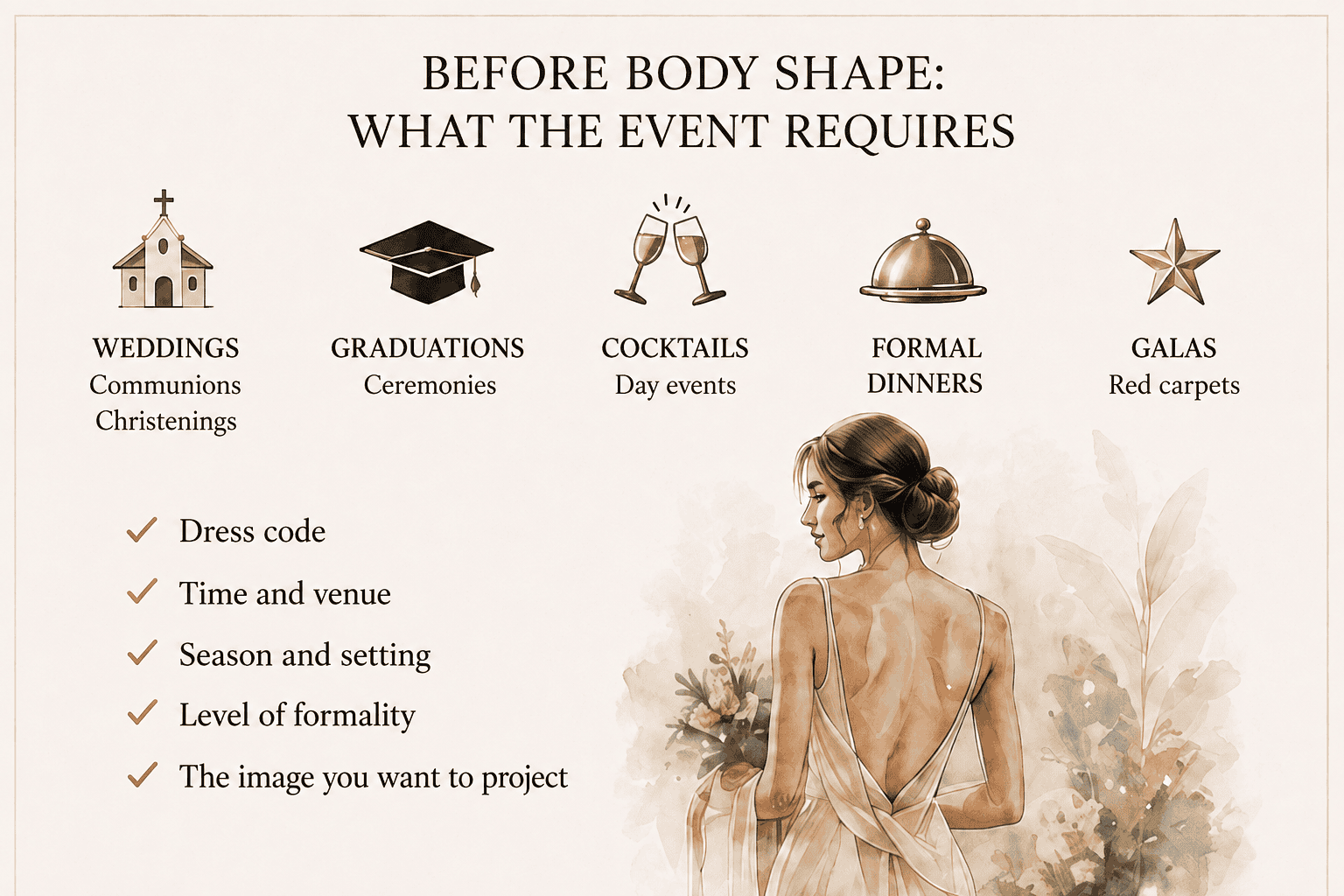
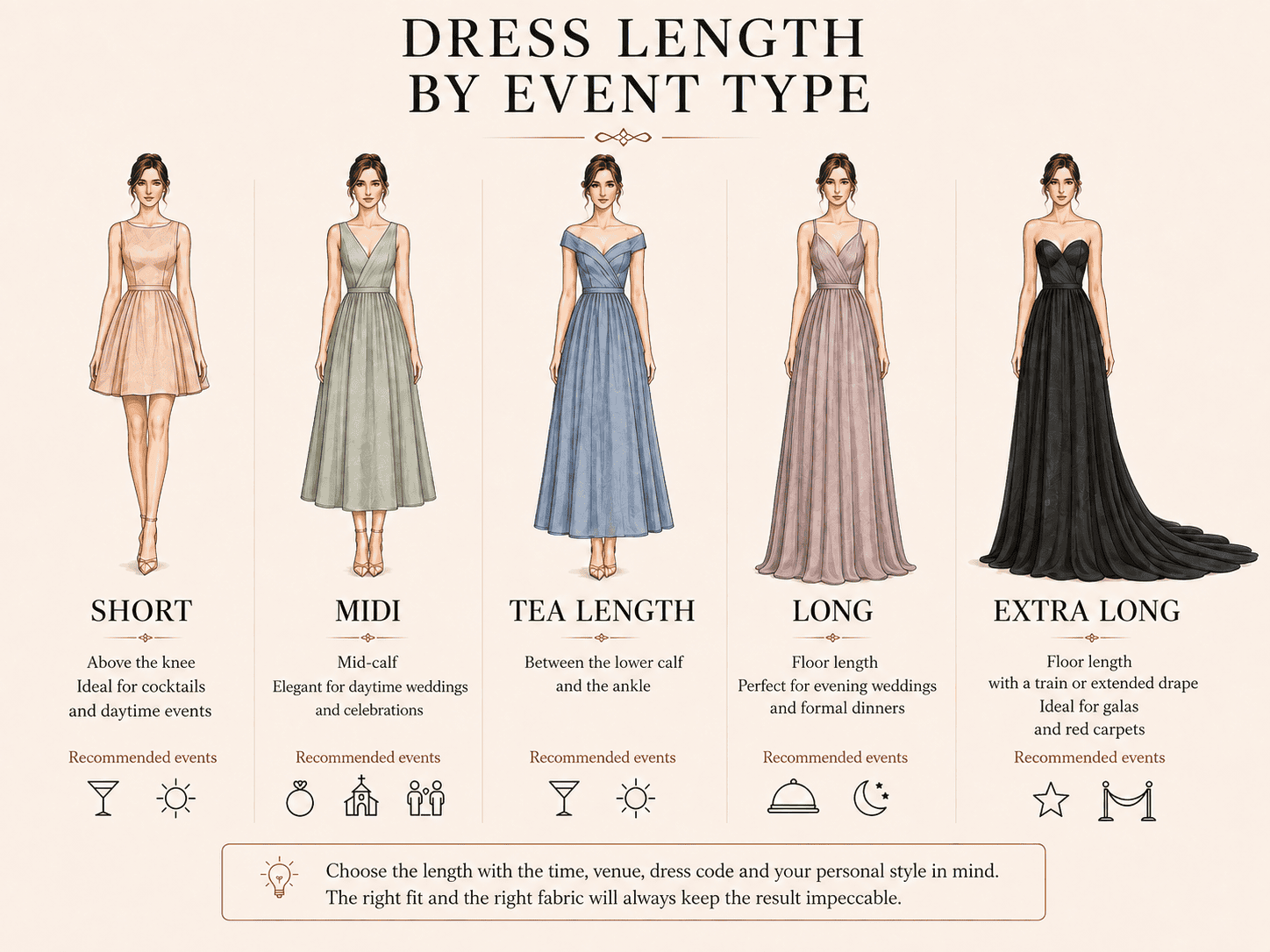
At weddings, christenings and First Communions, the invitation, time of day and venue usually indicate the level of ceremony. Knee-length and midi dresses offer many options for daytime celebrations. A more commanding full length may be appropriate for a formal evening wedding or a gala.
Graduations and cocktail events allow a more flexible interpretation. Short dresses, midi lengths, jumpsuits or two-piece ensembles can all work, provided that the construction and accessories remain coherent. At formal dinners, award ceremonies and red-carpet events, the design can take on more structure, deeper colour, shine or volume.
Six questions to ask before choosing
- Does the invitation specify a dress code?
- What time and where will the event take place?
- What is your relationship to the people at the centre of the occasion?
- What temperature, season and type of terrain should you expect?
- How long will you need to remain standing or seated?
- What impression do you want to convey: serene, romantic, powerful, minimalist or theatrical?
Body shape helps guide the pattern; the event determines how that pattern should be expressed. For weddings, the guide What to wear to a wedding according to the time of day (available in Spanish) expands on lengths, colours, fabrics and accessories without duplicating the focus of this article.
How to choose a dress for your body shape without turning it into a label
Recognising a silhouette does not require precise calculations. It is enough to observe the visual relationship between the shoulders, waist and hips while wearing something that allows those proportions to be seen clearly.
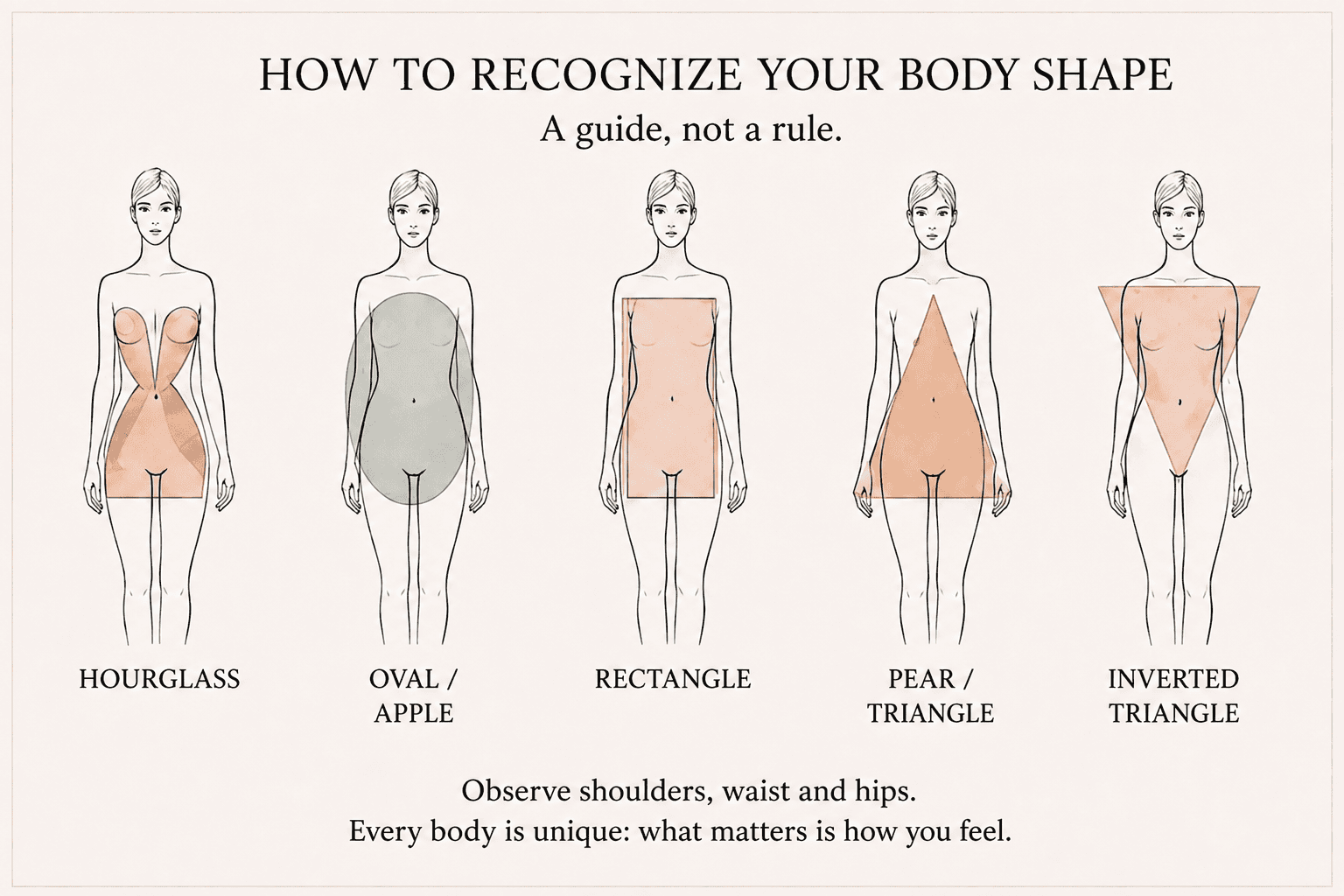
An hourglass silhouette has balanced shoulders and hips with a defined waist. In a pear or triangle silhouette, the hips have greater visual presence than the shoulders. The opposite is true for the inverted triangle. A rectangle silhouette maintains a relatively even line through the shoulders, waist and hips. In an oval or apple silhouette, the central area is more prominent and the waist appears less defined.
Many women combine characteristics of two categories. Height, torso length, bust position, leg shape and posture also influence the result. These references should therefore be used as a starting point, not as an automatic formula.
An atelier approach does not try to fit every woman into a geometric figure. It observes the real body, movement, fabric drape and the intention of the design in order to decide what should be emphasised, balanced or left exactly as it is.
What dress flatters an hourglass body shape?
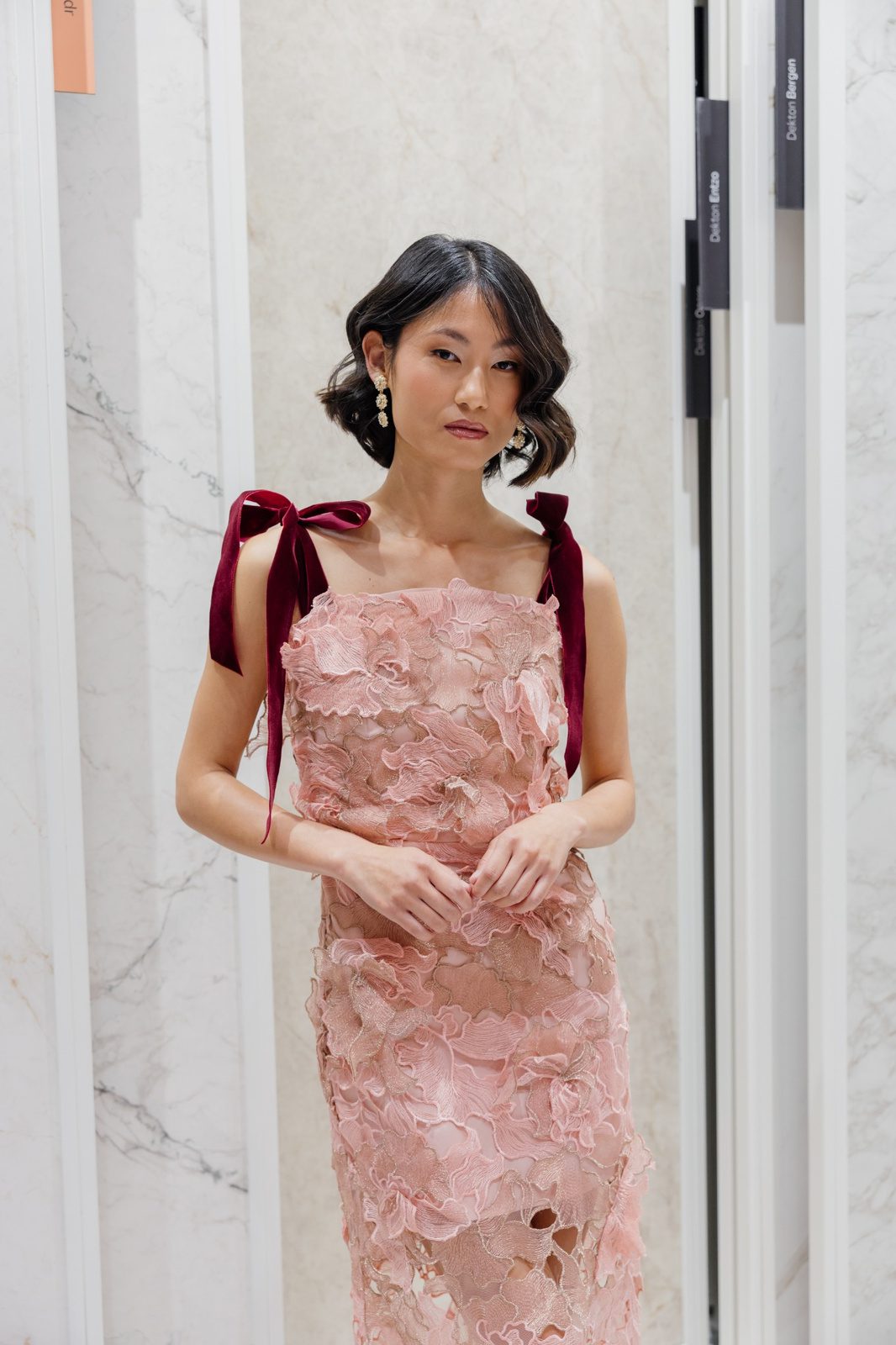
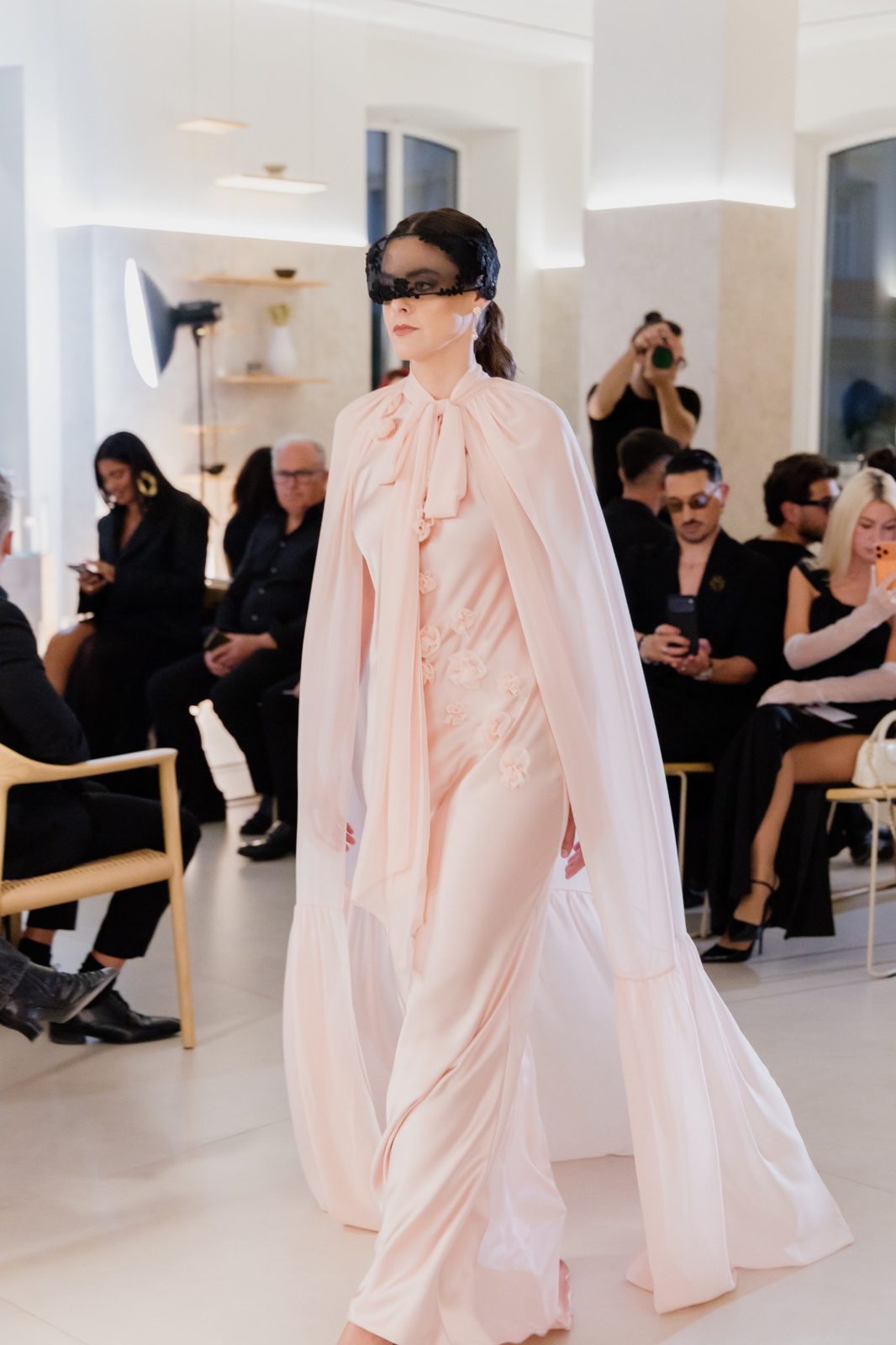
In an hourglass silhouette, the shoulders and hips have similar proportions and the waist is clearly visible. The design can follow that balance without needing to add substantial volume.
Cuts and design details that work with its proportions
Wrap dresses, fitted styles and waist-seamed designs often respect the natural structure. An integrated belt, well-positioned darts or draping that converges towards the centre can define the waist without constricting it.
V-necks, square, sweetheart and boat necklines can work depending on the bust, neck and shoulders. The choice should not be made solely according to body category: neckline stability and the degree of coverage required for the event are equally important.
How to adapt it to different events
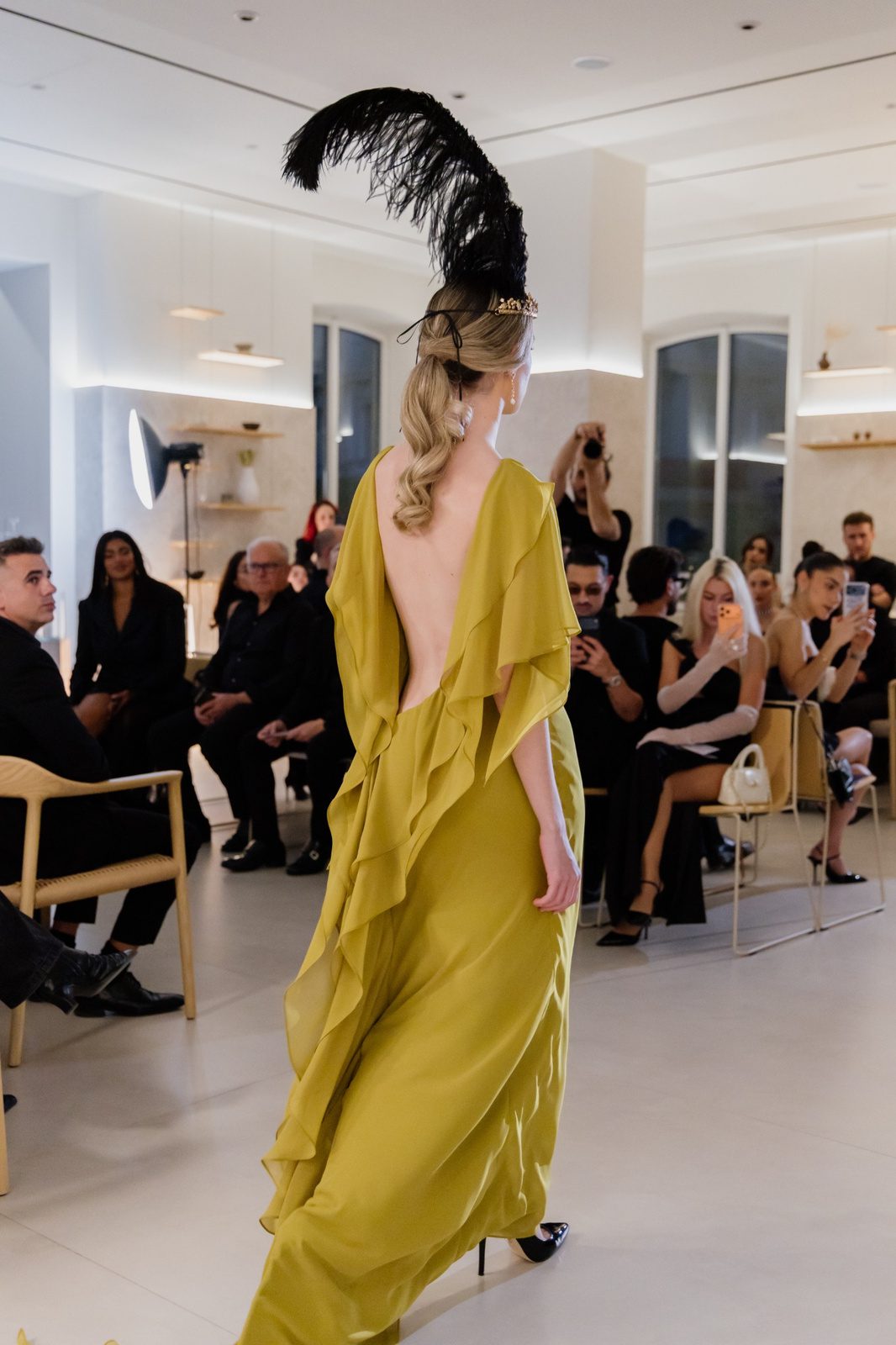
For a First Communion, christening or morning wedding, consider a crepe midi dress, a gently flared silhouette or a cocktail design with a defined waist. For a formal dinner or evening wedding, the same principle can be translated into a longer dress, a satin finish or a controlled slit. For a gala, a structured bodice and a skirt with movement can reinforce the proportions without overloading the look.
A straight or voluminous dress is not forbidden. It will simply reduce the visual contrast between the waist and hips. When that clean line is part of the intended style, it can be an entirely coherent choice.
What dress flatters an oval or apple body shape?
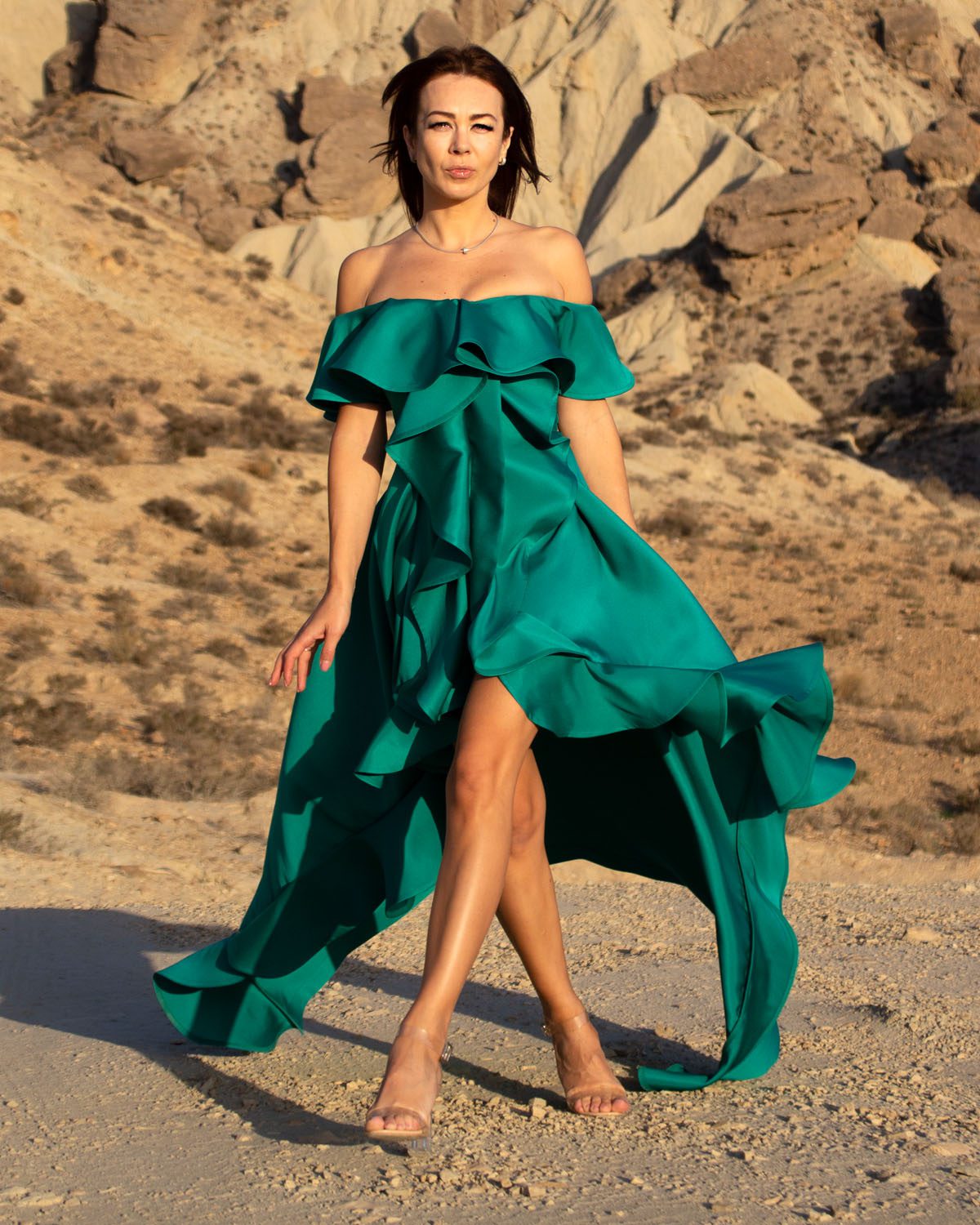
In an oval or apple silhouette, the central area has greater presence and the waist appears less defined. The dress can create continuity, introduce diagonals or shift the focus towards the neckline, the legs or the movement of the garment.
Cuts and design details that create continuity
V-necks, wrap designs and diagonal lines guide the eye vertically. Empire lines, A-line skirts and dresses with controlled drape can follow the abdomen without adding unnecessary rigidity.
Draping is especially effective when it originates in the pattern and distributes the fabric precisely. Adding unstructured volume around the middle may create a different effect from the one intended. It is also worth avoiding a horizontal seam that ends exactly at the widest point when the objective is to create continuity.
How to adapt it to different events
For daytime celebrations, a wrap midi dress, an A-line design or a fluid silhouette with light sleeves can work well. For a graduation or cocktail event, an above-the-knee length can draw attention to the legs when that is the area you want to emphasise. For a gala, vertical lines, a lightweight cape or a long skirt with movement can create presence without adding visual weight.
The dress should be tested while seated and in motion. A garment may drape impeccably while standing yet pull across the abdomen, shift at the neckline or rise at the front when posture changes.
What dress flatters a rectangle body shape?
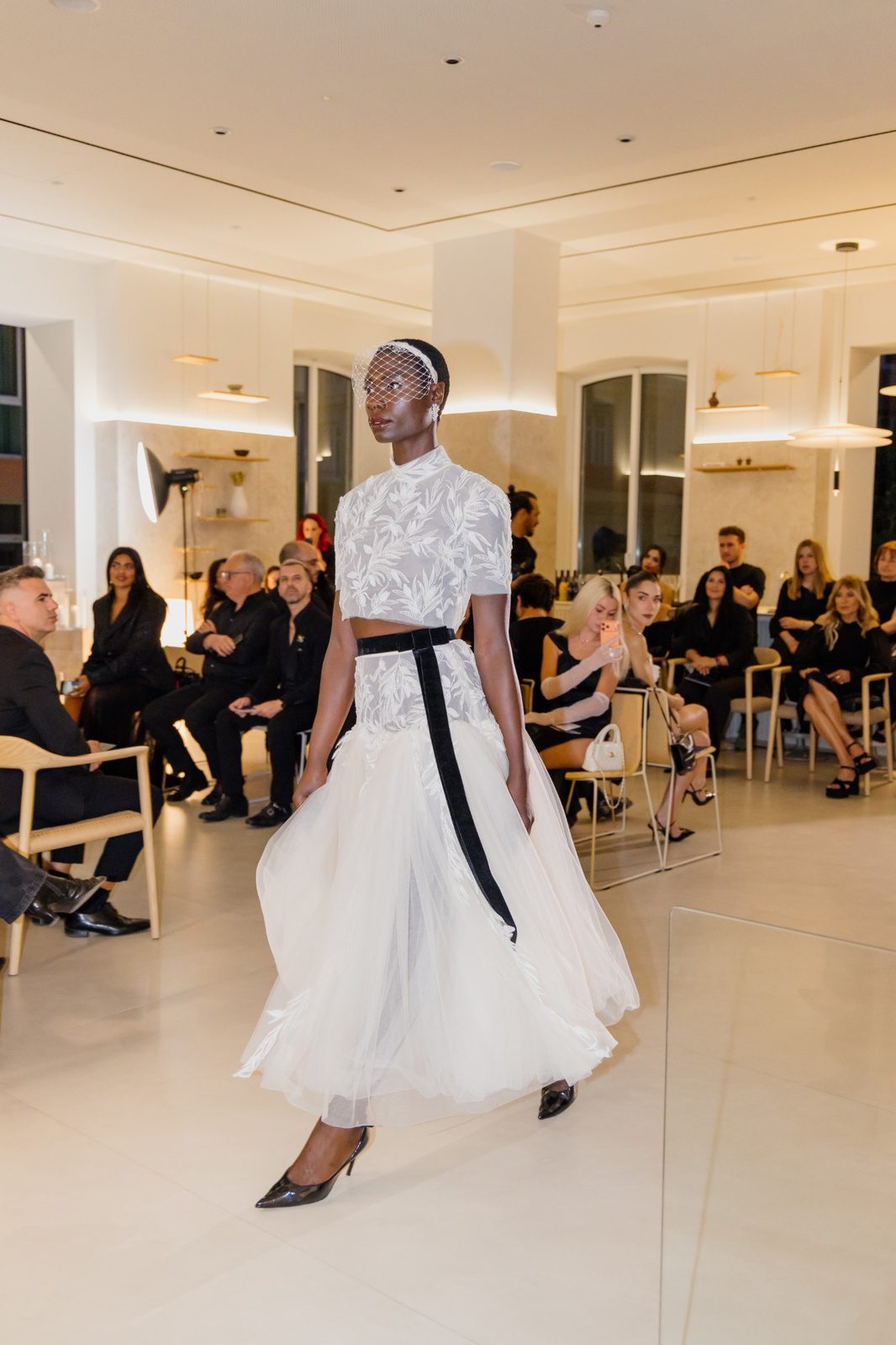
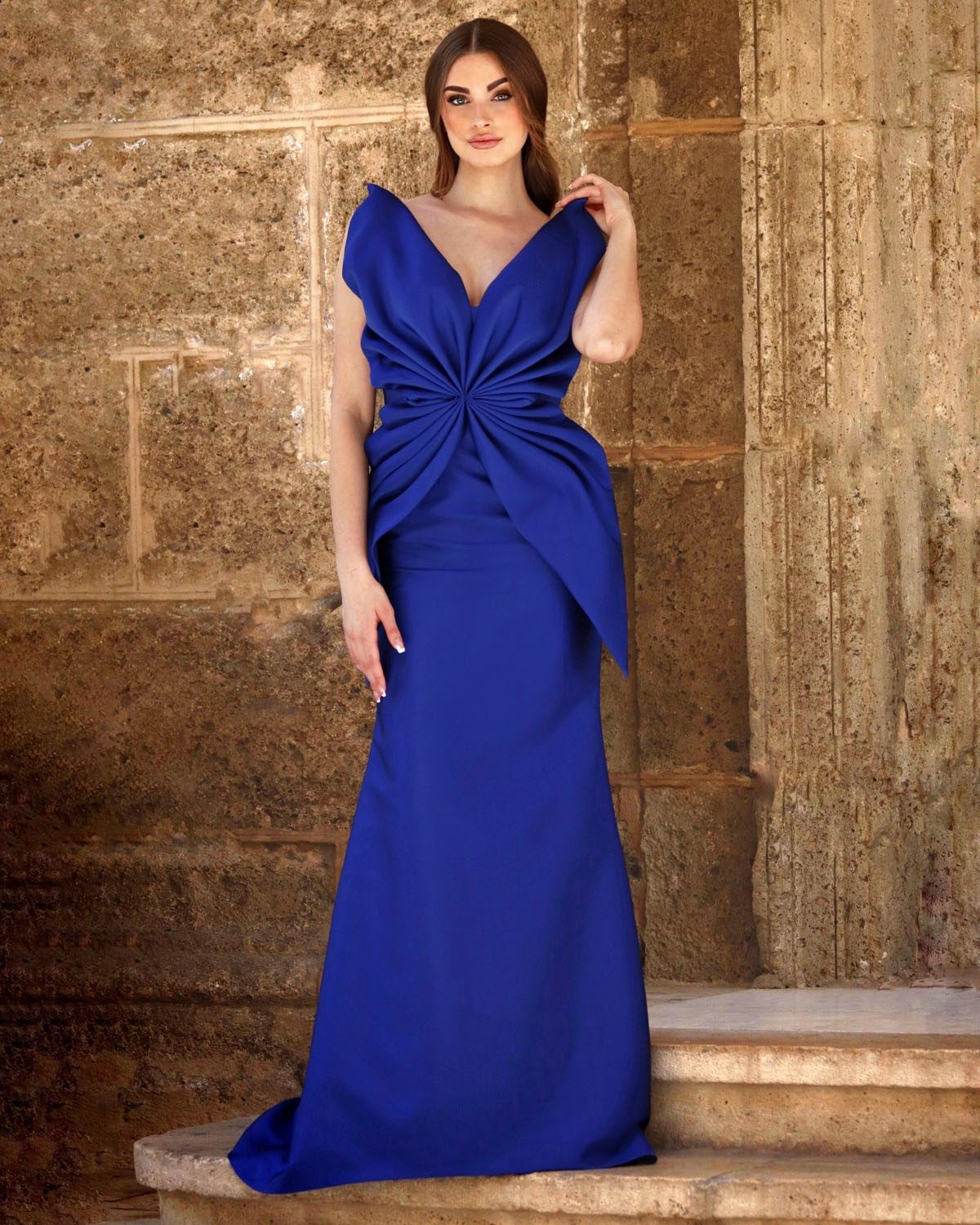
A rectangle silhouette has a relatively even relationship between the shoulders, waist and hips. It offers two possible directions: preserve a clean, architectural line or introduce elements that create greater contrast.
Create definition or preserve a streamlined line
To maintain verticality, choose straight, asymmetric or lightly fitted dresses with longitudinal seams and fabrics that hold their shape. This option can be particularly elegant in minimalist designs.
When the aim is to define the waist or introduce visual curves, belts, waist seams, side draping, flared skirts, pleats and restrained ruffles can be used. Volume should be positioned intentionally. There is no need to add it simultaneously at the shoulders, waist and hips.
How to adapt it to different events
For a First Communion or daytime wedding, a midi dress with a moving skirt and a square or asymmetric neckline can work well. For a graduation, a short dress with a suggested waist can create a more dynamic image. At a gala, a column design preserves verticality, while a structured bodice with a full skirt creates a more sculptural silhouette.
The objective is not to transform the body into an hourglass, but to decide how much movement, structure or definition the design should include.
What dress flatters a pear or triangle body shape?
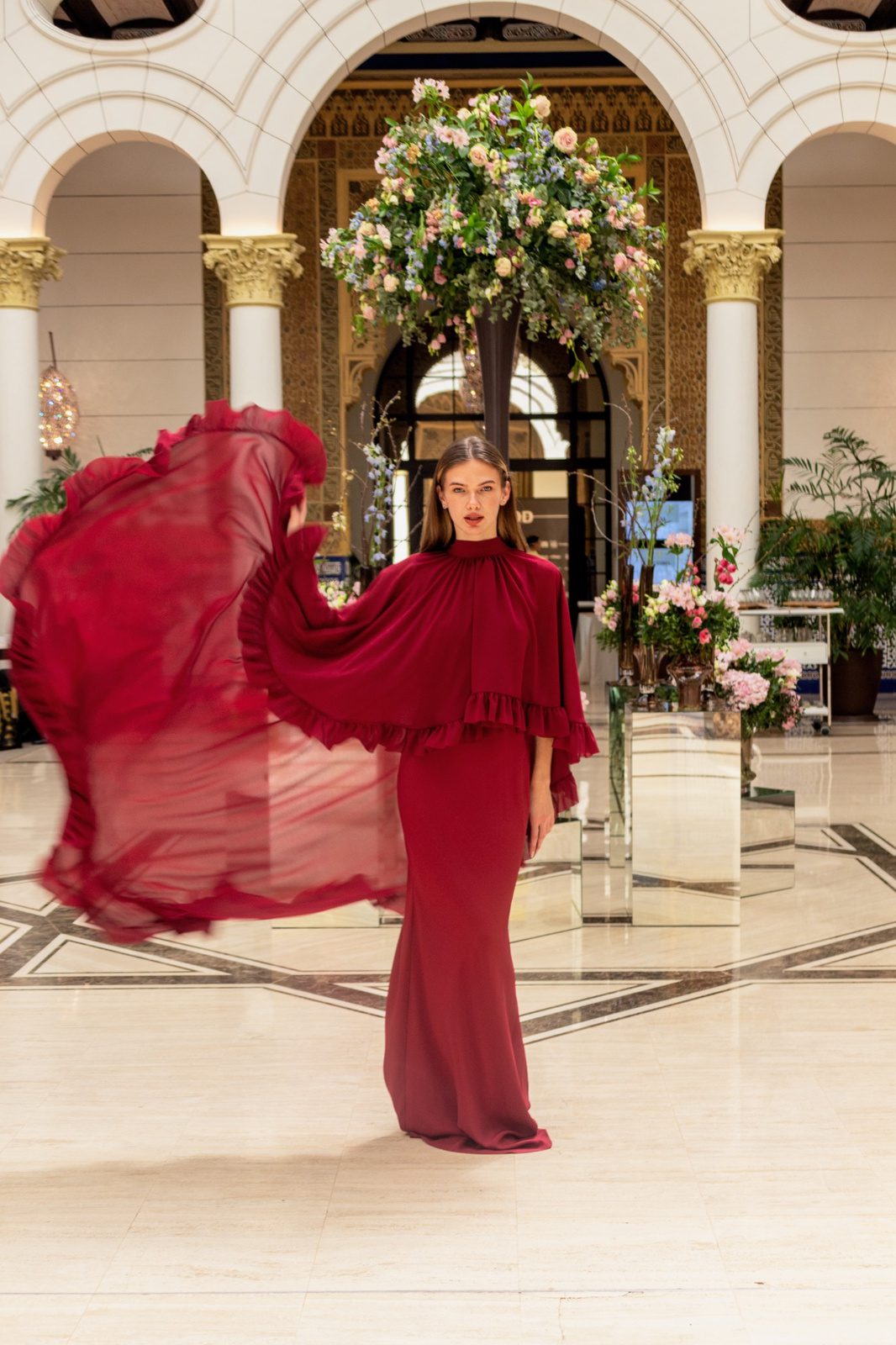
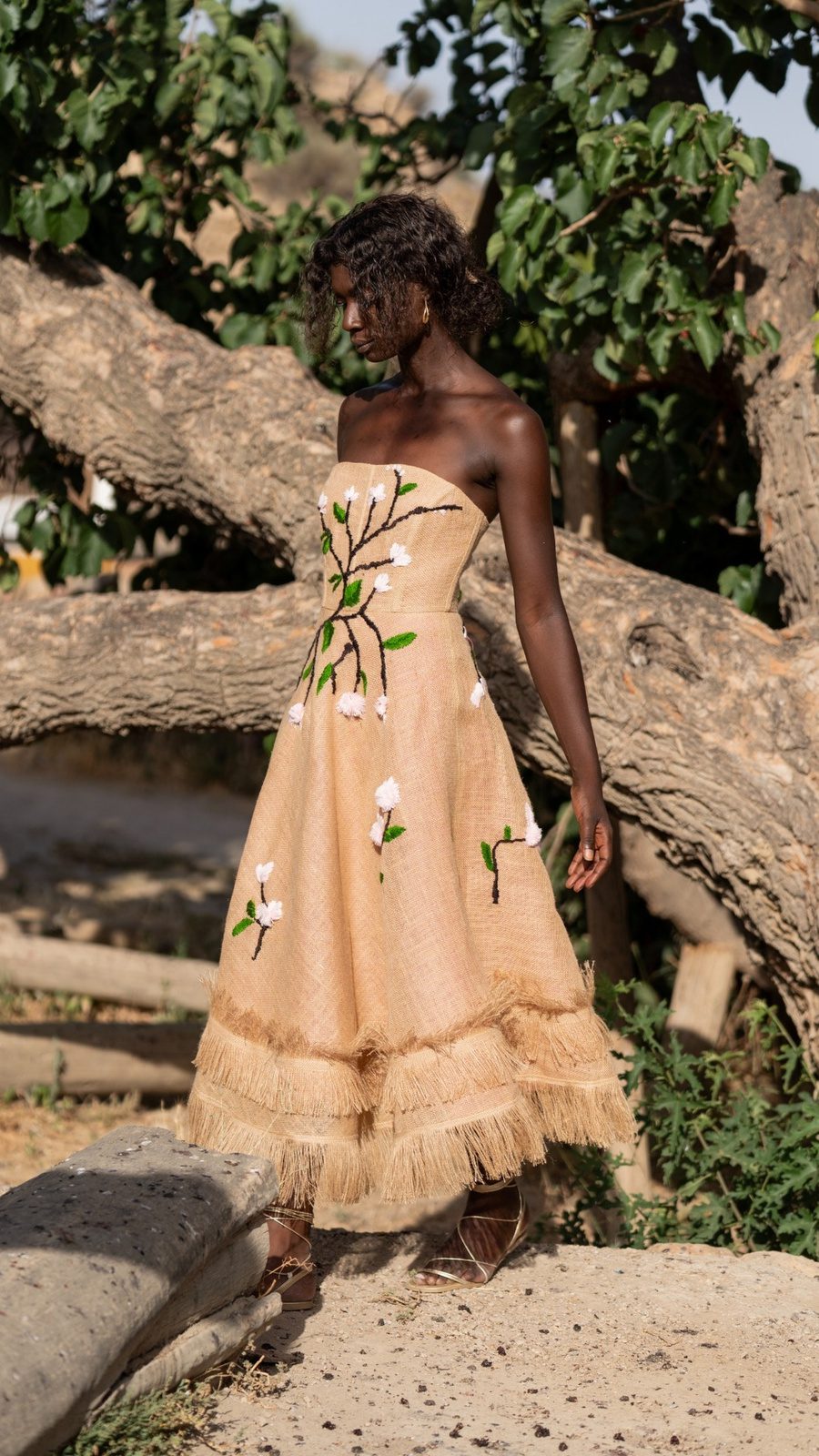
In a pear or triangle silhouette, the hips have greater visual presence than the shoulders. When the aim is to balance both areas, the design can concentrate part of the interest around the face, neckline, sleeves or upper line.
How to distribute volume
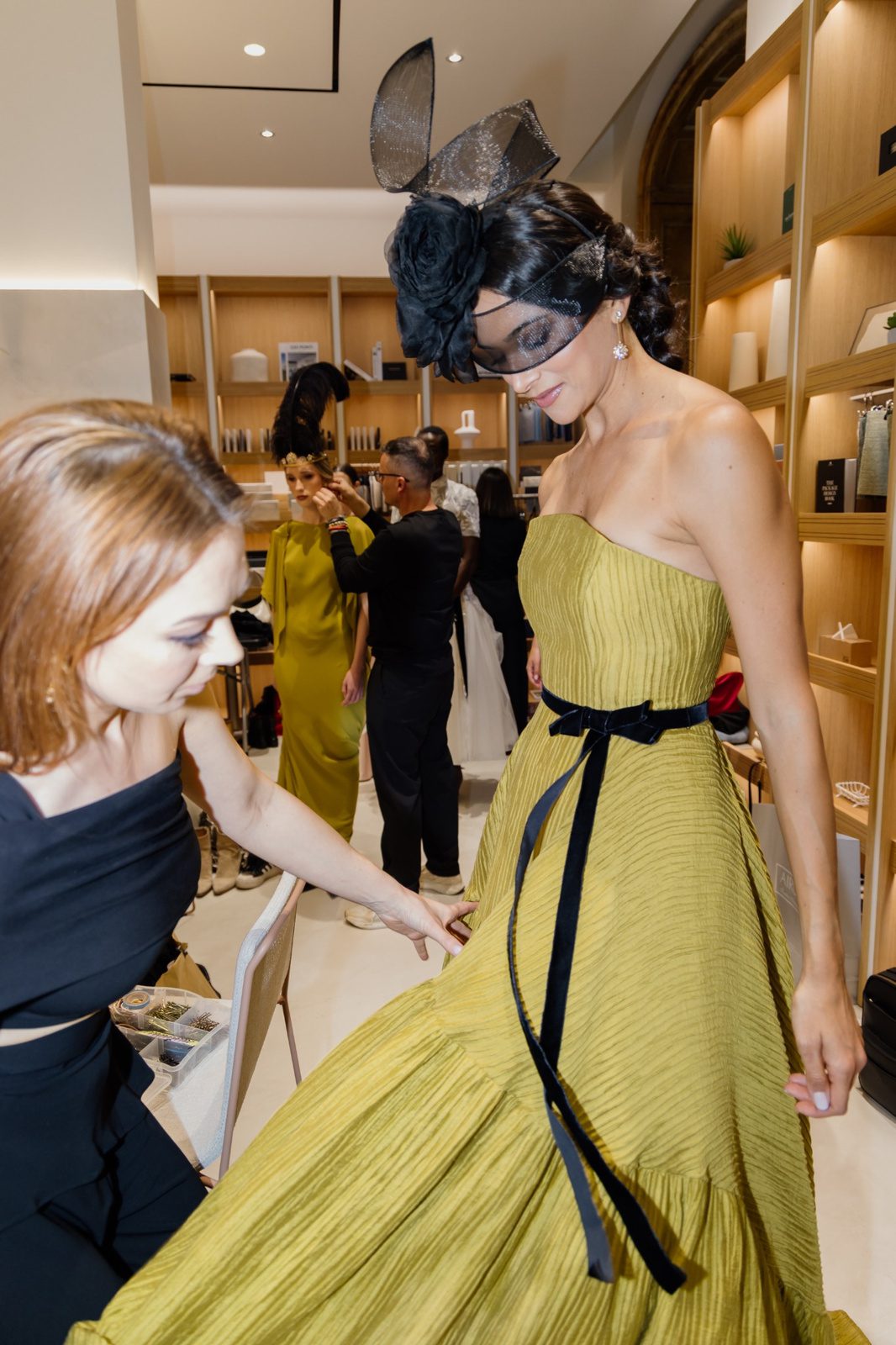
Boat, square, asymmetric and gently open necklines visually broaden the upper area. Sleeves with moderate structure, embroidery, a change of colour or a detail positioned near the shoulders can also create balance.
In the lower half, flared skirts, A-line cuts and fabrics that follow the hip without clinging or adding unnecessary stiffness often work well. A straight or fitted skirt can also be elegant when the aim is to emphasise curves or when the bodice provides enough presence in the upper area.
How to adapt it to different events
For a First Communion, christening or daytime wedding, consider a midi dress with a detailed bodice and a clean-lined skirt. For a cocktail event, an asymmetric neckline or statement sleeves can become the focus. For a gala, an embroidered bodice, precisely constructed shoulders or a long skirt opening from the waist can create a strong proportion.
Ruffles or draping placed directly over the hip increase its prominence. That is not a mistake: it is appropriate when the added volume is part of the aesthetic intention.
What dress flatters an inverted-triangle body shape?
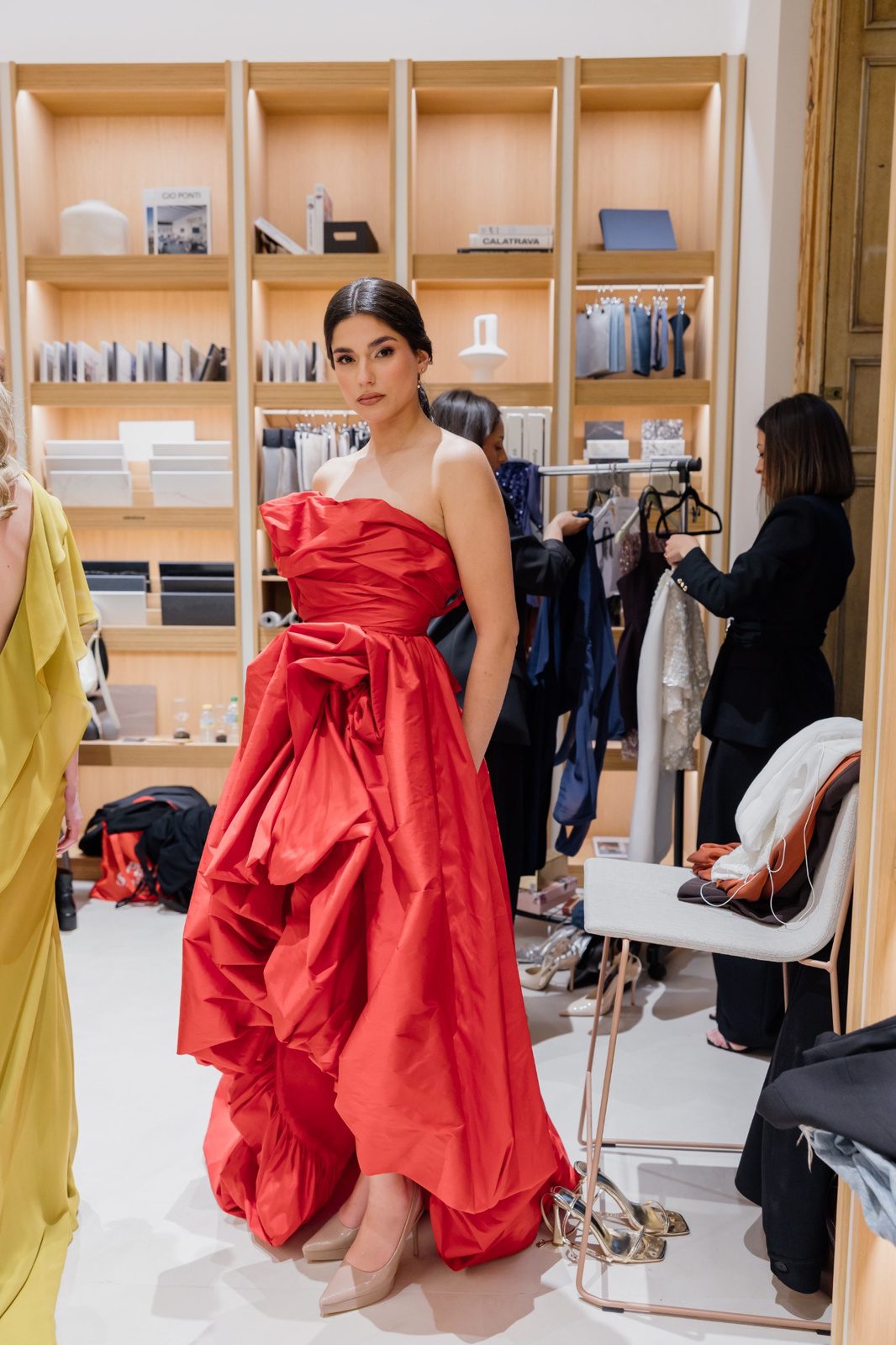
In an inverted triangle, the shoulders have greater presence than the hips. When the aim is to balance the silhouette, the upper half can remain clean while movement, texture or volume is transferred to the skirt.
Necklines and skirts that change the proportion
V-necks and asymmetric designs create diagonal lines that soften the horizontal line of the shoulders. Clean sleeves and bodices without excessive embellishment keep the upper area defined.
In the lower half, A-line skirts, box pleats, fine pleats, low ruffles and fabrics with movement can be introduced. A colour contrast or pattern concentrated in the skirt also directs the eye towards that area.
How to adapt it to different events
For a daytime celebration, a midi dress with a clean bodice and flared skirt offers a balanced solution. For a graduation or cocktail event, a short skirt with moderate volume can reinforce the lower area. For an evening wedding or gala, a long structured skirt, draping at the hip or a two-piece silhouette can create a more theatrical proportion.
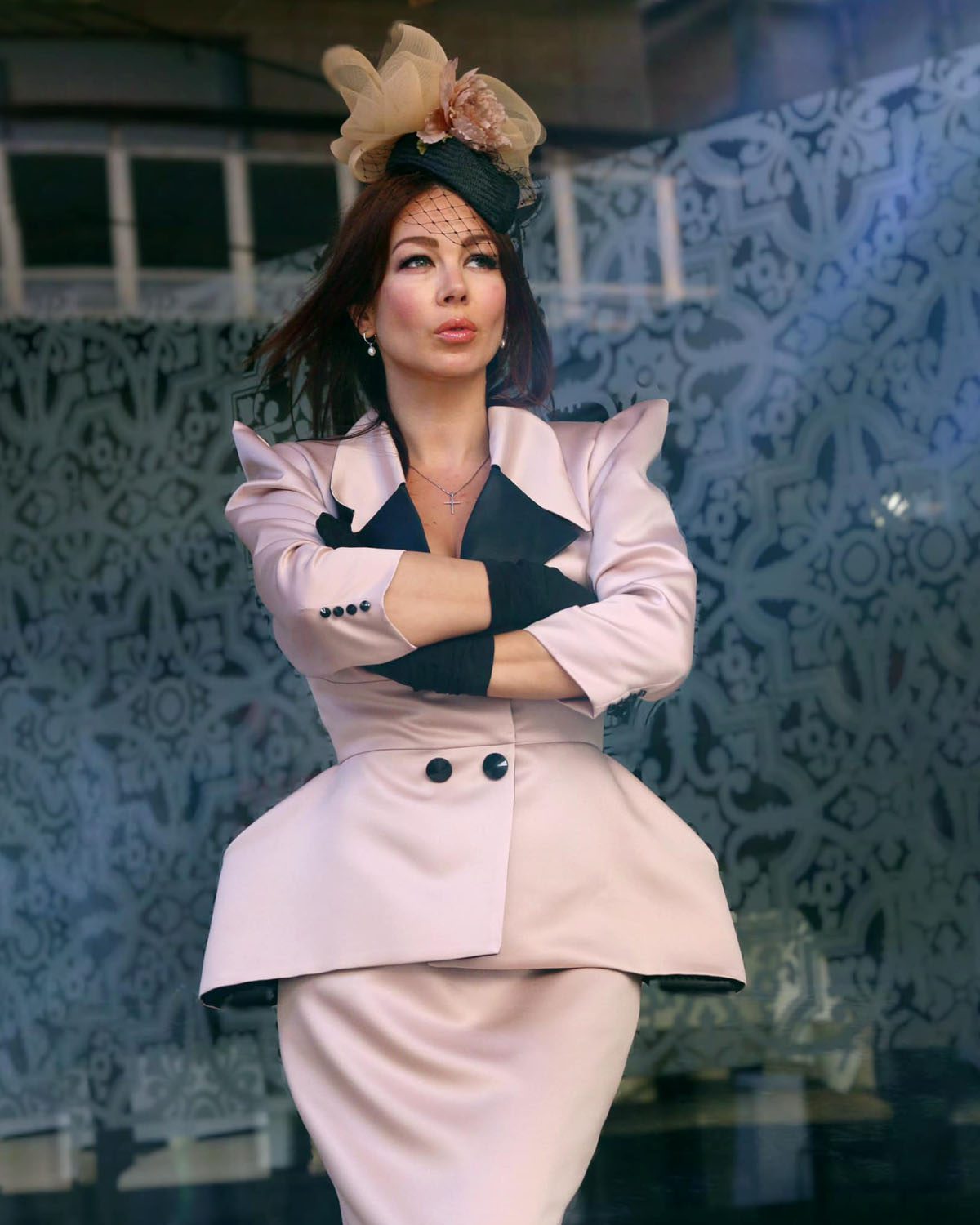
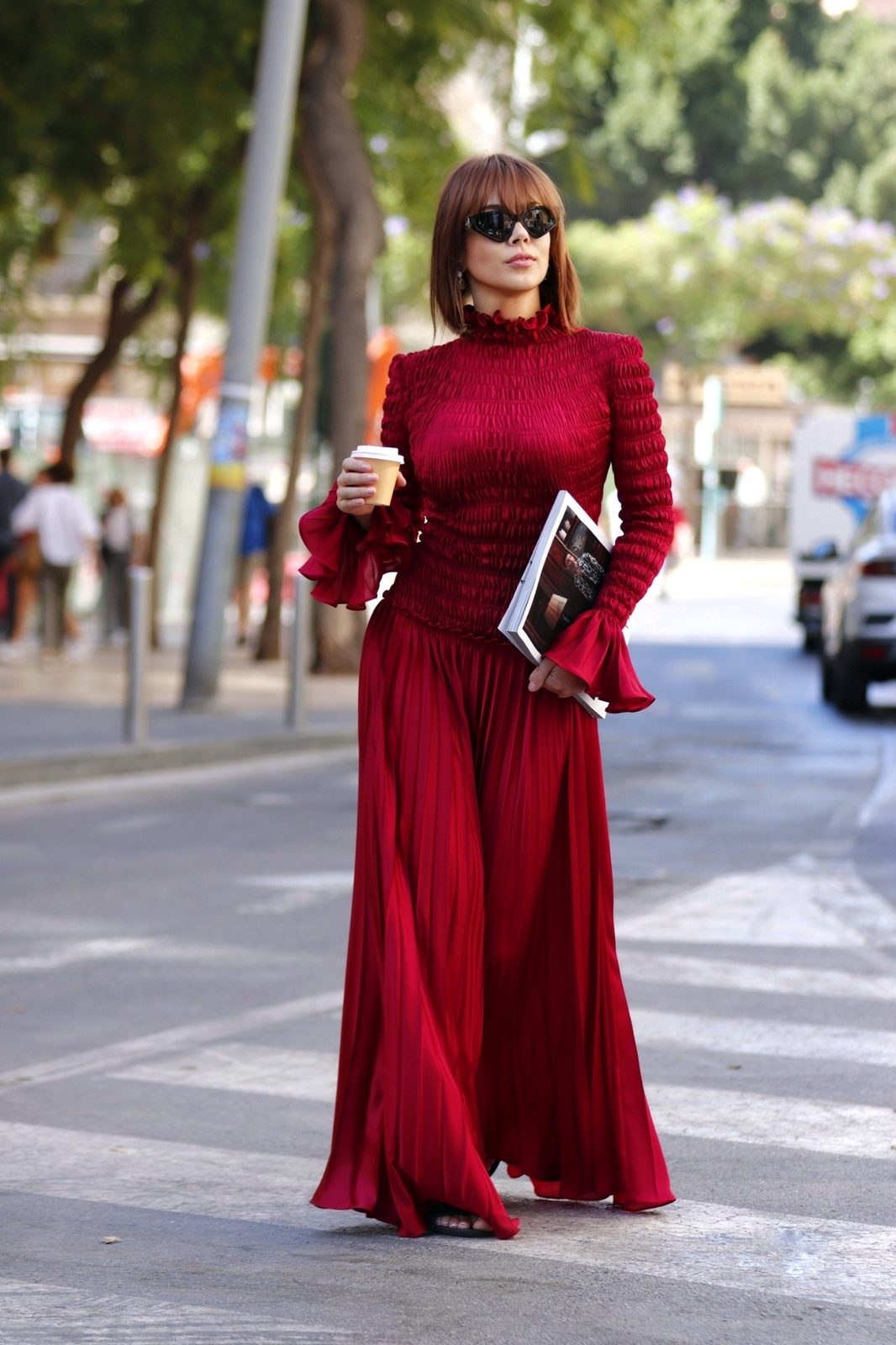
Shoulder pads, highly voluminous sleeves and embellishment concentrated at the shoulders intensify the upper line. They can be used when the desired image is powerful and architectural, although they would not be the primary choice if the aim is to reduce the contrast with the hips. The burgundy ensemble in the gallery illustrates a deliberate decision: it does not soften the shoulder, but makes it the expressive centre of the design.
Fabric can completely change the effect of a dress
Two dresses with a similar pattern can behave very differently depending on the weight, stretch, texture and drape of the material. The pattern defines the shape; the fabric determines whether that shape holds, adapts or moves.
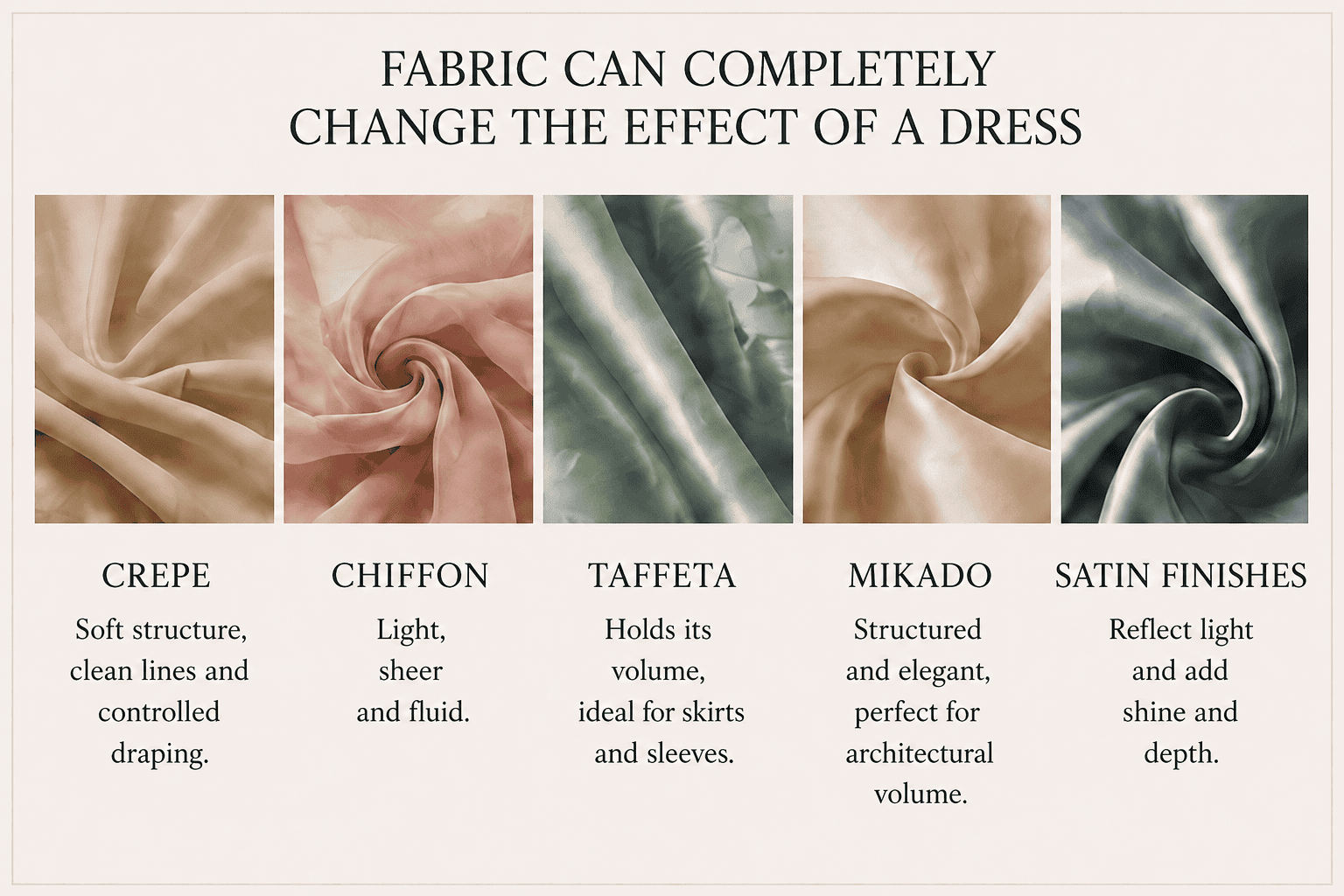
Crepe can create clean lines and controlled draping. It can follow the body without relying on intense shine and is versatile in midi, long and fitted dresses.
Chiffon adds transparency, lightness and movement. In sleeves, capes and layered pieces, it can soften a structured area and create a more delicate transition.
Taffeta holds volume and is useful when constructing a skirt, sleeve or sculptural detail. Its presence requires precise control of both the quantity and placement of the fabric.
Mikado offers structure and a surface particularly suited to defined lines, volume and ceremonial dresses. Its composition should be checked for each garment and should not automatically be described as silk.
Satin finishes reflect light and increase attention on the area where they are used. They can add depth at a formal dinner or gala and a more restrained luminosity at a daytime event, depending on the colour, weight and construction.
The name of the fabric alone does not determine whether a dress will flatter. The lining, seams, grain direction and placement of each volume are equally decisive. The article on burlap dresses in haute couture (available in Spanish) shows how an unexpected material can acquire a different presence through pattern cutting, structure and craftsmanship.
Colour and details also direct the eye
No colour belongs to a particular body shape. Contrast, shine, pattern and colour placement do, however, change the point of focus.
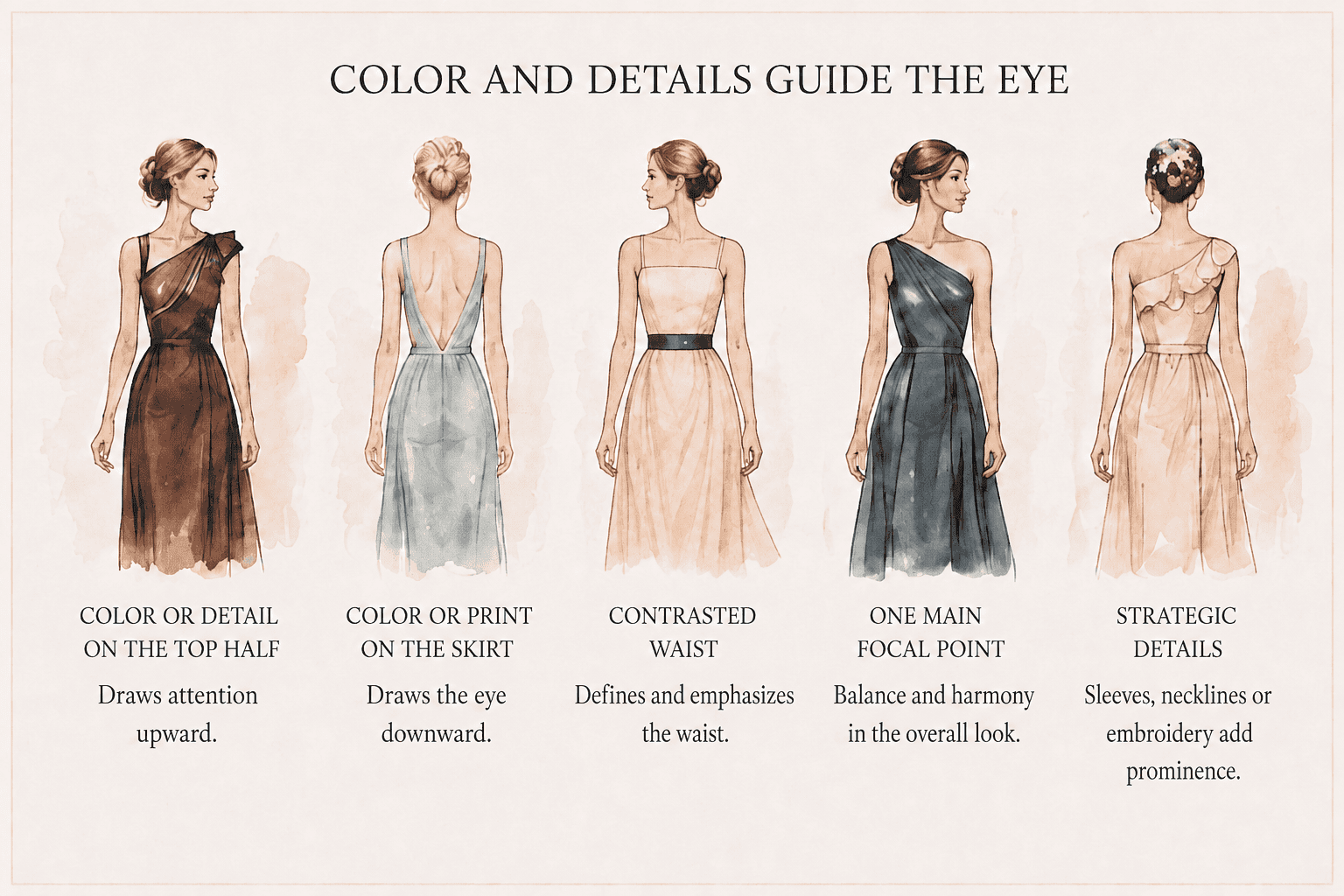
A luminous shade or a detail near the face reinforces the upper area. An intense colour, pattern or shiny fabric in the skirt increases the presence of the lower half. A monochrome look creates continuity, whereas a contrasting belt interrupts that line and defines the waist.
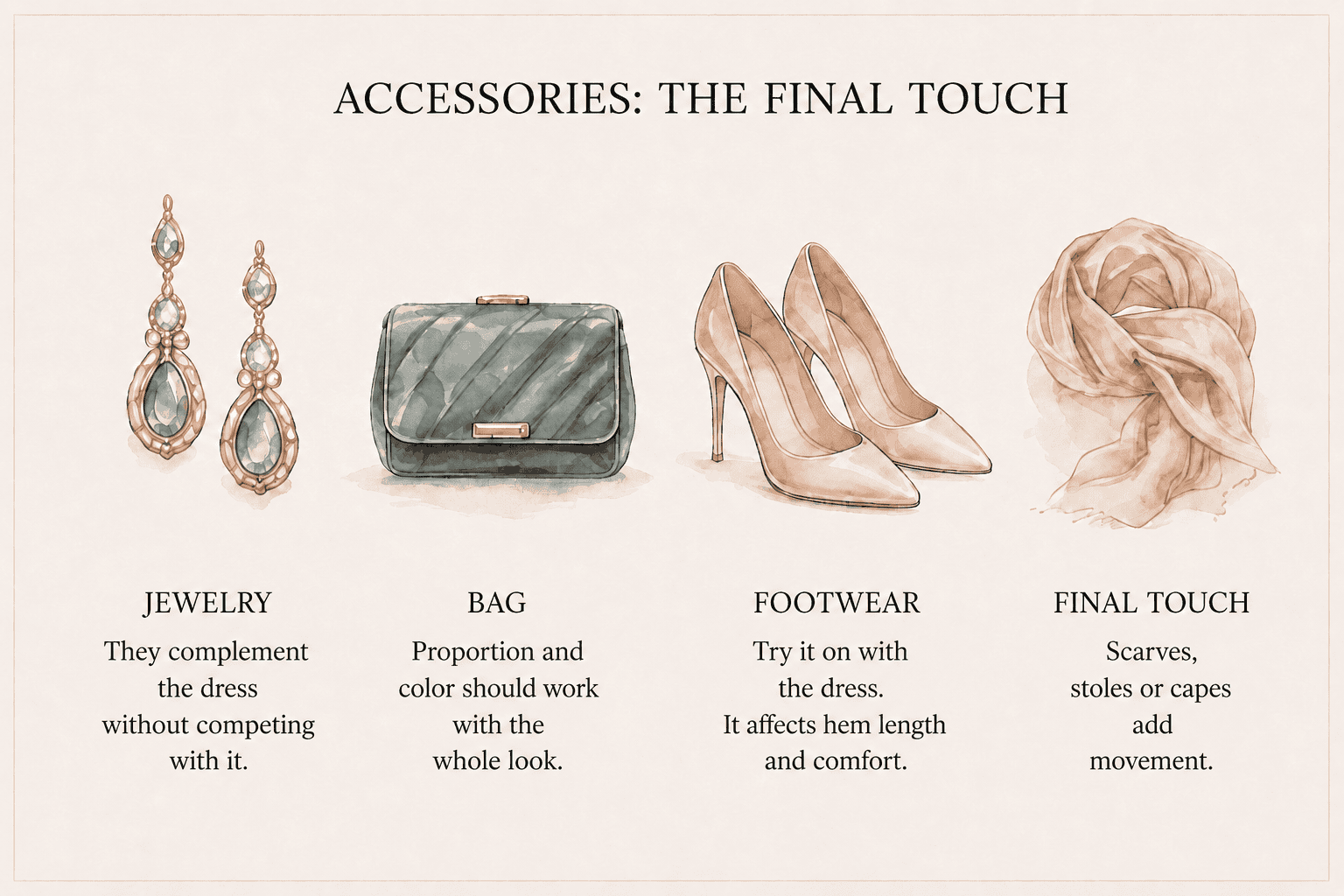
It is useful to establish one primary focus. If the dress has an architectural neckline, voluminous sleeve or statement embroidery, the accessories can remain quieter. If the design is streamlined, distinctive earrings, a bag or shoes can add character.
Accessories and shoes: complement rather than compete
Shoes should be tried on with the dress. They change posture, hem height and the visual relationship between the leg and skirt. A high heel is not a prerequisite for elegance: a low heel, stable platform or refined flat shoe can all form part of a formal look.
Fit matters more than the body-shape category
A recommendation based on silhouette loses its value if the dress is not correctly fitted. Waist height, dart position, neckline stability and length can alter the result more than the label assigned to the body.
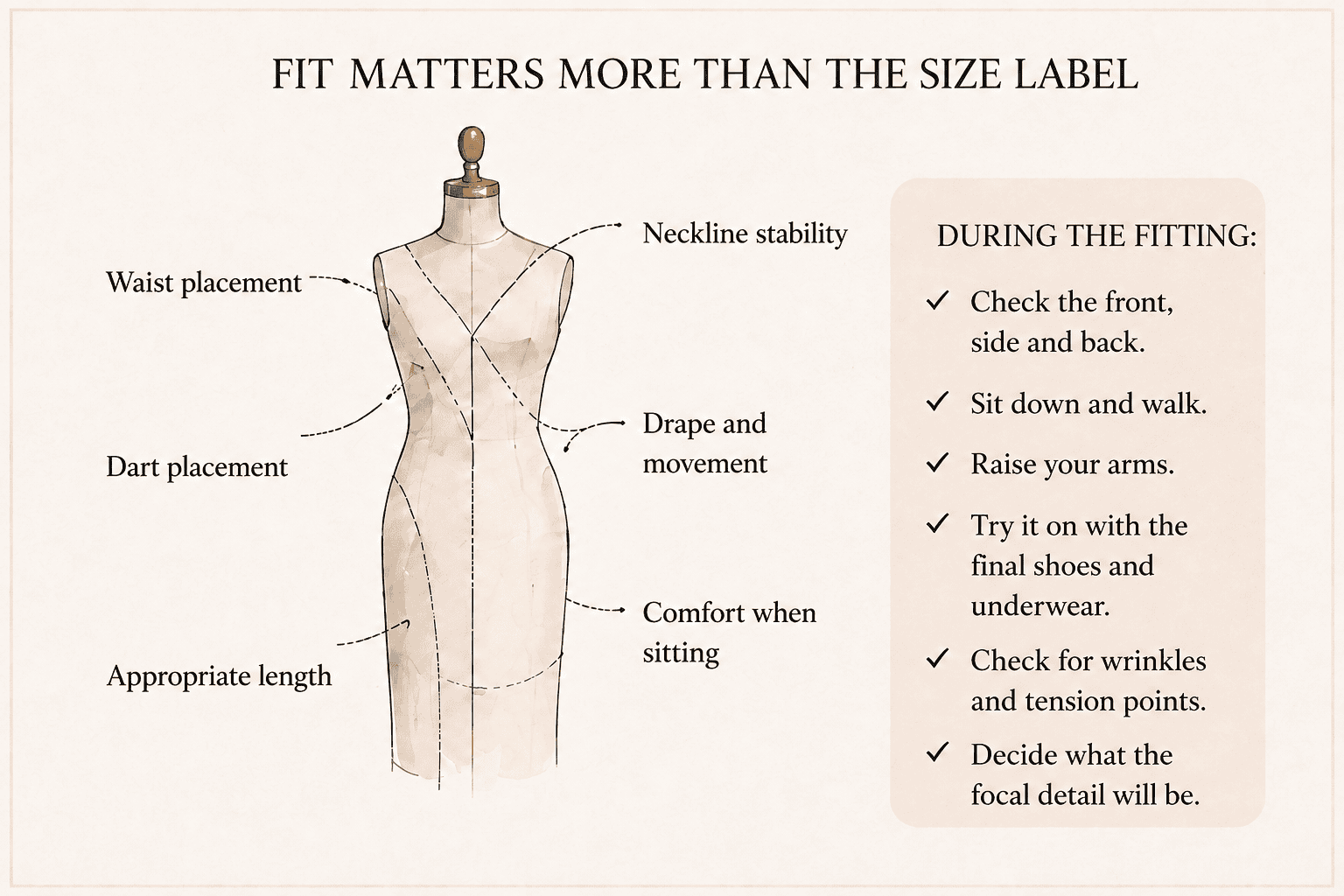
Eight checks during a fitting
- View the dress from the front, side and back.
- Sit down to check the abdomen, neckline and skirt.
- Walk and confirm that the garment stays in position.
- Raise your arms and check sleeve mobility.
- Wear the final shoes and underwear.
- Review where wrinkles or tension points appear.
- Confirm that the length allows you to walk safely.
- Decide which element will be the focus of the look.
Shortening the bodice, correcting a dart, stabilising a neckline or adjusting the length can transform a garment. A standard size, a personalised alteration and a made-to-measure design are therefore different services. The online store allows clients to choose specific collection pieces; the atelier can assess measurements, alterations or an individual commission according to the requirements of each case.
What if you fall between two body shapes?
It is common to recognise characteristics of more than one silhouette. In that case, it is better to stop searching for an exact label and assess the dress area by area.
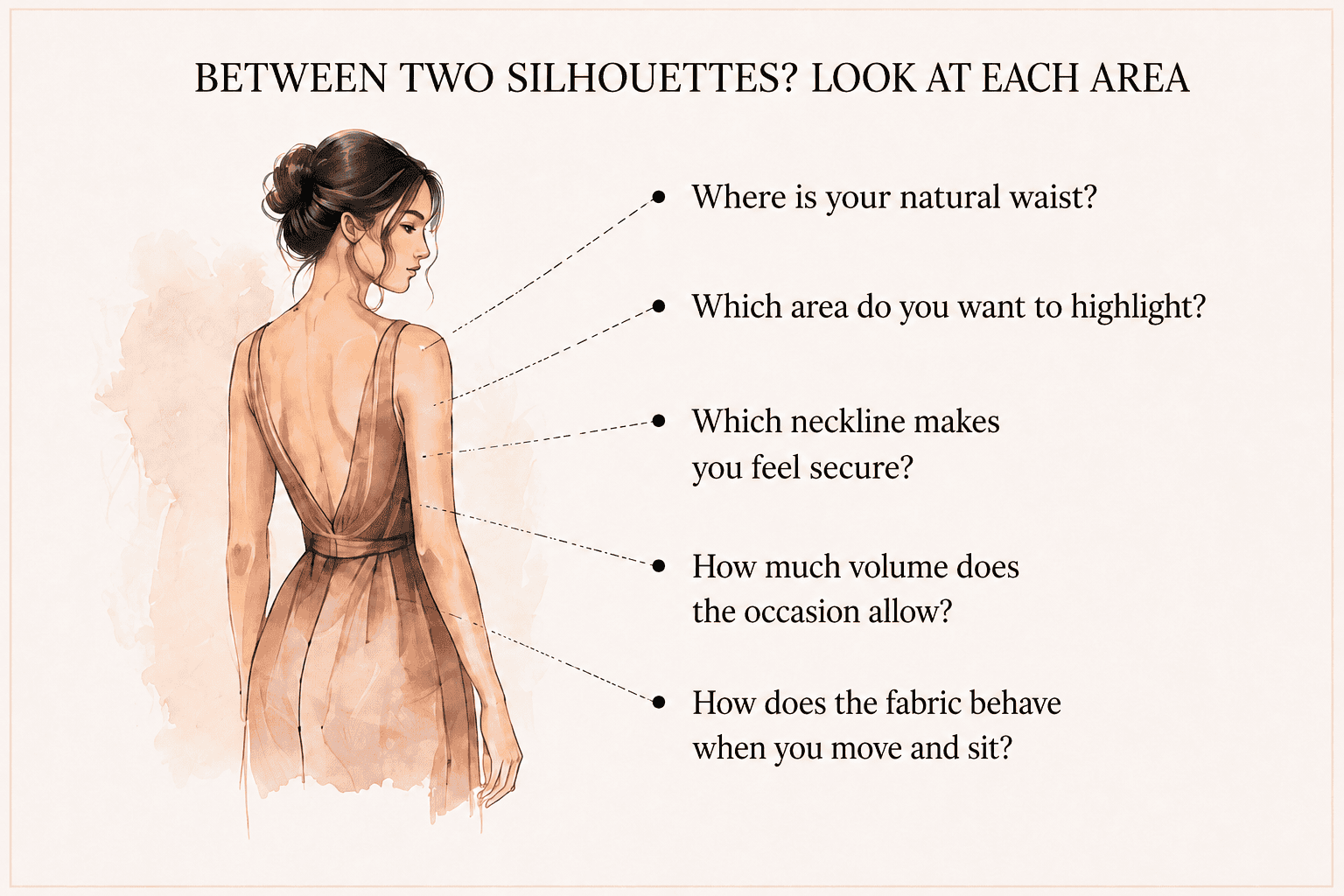
The shoulders may visually resemble an inverted triangle while the waist remains well defined. It is also possible to have a straighter torso with greater volume through the hips. The solution is not to choose one dominant category, but to decide:
- Where the waist should sit.
- Which area you want to emphasise.
- How much volume the occasion allows.
- Which neckline remains stable and comfortable.
- How the fabric behaves while walking and sitting.
A real fitting provides more information than any theoretical classification. It also reveals whether the design retains its intention when the wearer moves, sits and adopts a natural posture.
Frequently asked questions about dresses and body shapes
Does body shape depend on dress size or weight?
Not directly. Dress size expresses a set of measurements, while silhouette describes the visual relationship between different areas. People who wear different sizes can have similar proportions.
Are certain dresses forbidden for each silhouette?
No. Every cut, fabric and volume creates a different effect, but there is no universal list of prohibitions. Understanding that effect allows you to choose consciously, whether you want to balance proportions or emphasise them.
Do I have to define the waist?
No. Defining the waist is only one design resource. A straight, fluid, column or architectural dress can be very elegant when it suits the wearer's personal style, the event and the required fit.
What if I cannot identify my body shape?
You can assess the shoulders, waist, hips, waist height and leg length separately. You can also try more than one silhouette and compare how the proportion changes. You do not need to assign yourself a category in order to choose well.
Can the same dress work for a wedding, First Communion and gala?
It may share the same basic cut, but the length, fabric, colour, degree of structure and accessories should be adapted to the context. The invitation and level of formality take priority.
What matters more: body shape or fit?
Fit. A theoretically recommended dress can lose its balance when the waist placement, darts, neckline or length do not correspond to the real body. A less predictable design can work extremely well when its construction is correctly adapted.
Does a made-to-measure dress always flatter more?
A made-to-measure dress allows the design to be developed around the wearer's specific proportions and requirements, but the result also depends on the design, fabric, pattern cutting and execution. A well-chosen and correctly altered collection garment can also produce an excellent result.
Find a dress that responds to your body and the occasion
Every silhouette offers different possibilities, but none should be reduced to a rigid formula. Choosing a dress for an event means interpreting the body, the context and personal identity at the same time.
Lyubasha Kyleshko works with collection dresses, alterations and personalised commissions for weddings, First Communions, graduations, galas and other special occasions. An atelier perspective makes it possible to assess the pattern, fabric, drape and movement before deciding which option responds most effectively to each woman.
+34 624 01 80 31 [email protected] Send a message through the contact form Atelier Lyubasha Kyleshko · C/ Plácido Langle, 6 · 04001 Almería, Spain
Be First to Comment